
On America’s 250th birthday, Washington’s biggest celebration turned into a test of trust as weather delays, security rules, and money moves raised fresh doubts about who the “Salute to America” was really for.
Story Snapshot
- Extreme heat and storms forced major last‑minute changes to Trump’s July 4 National Mall celebration.
- Organizers first delayed gate opening to 5 p.m. for safety, then evacuated and reopened at 9:45 p.m. after severe storms.
- Trump’s speech and the record‑breaking fireworks went late into the night, despite fears of low turnout.
- Millions meant for national park repairs were diverted to fund the show, fueling anger over “elite” misuse of public money.
How the Salute to America Was Supposed to Work
Freedom 250 organizers pitched the “Salute to America 250 Celebration & Fireworks” as a huge, unifying birthday party for the country on the National Mall. Plans called for music, military flyovers, a presidential speech, and what was billed as the world’s largest fireworks show. Under a revised schedule released before the holiday, gates to the Washington Monument grounds would open at 5 p.m. Eastern time because of dangerous heat, with the main event starting at 7 p.m., Trump speaking at 9:45 p.m., and fireworks at 10:30 p.m.
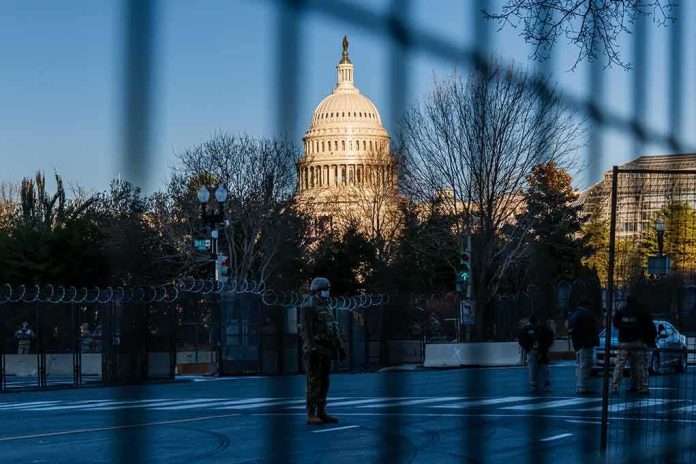
Federal agencies treated the celebration as a high‑risk event, similar to a State of the Union address. Reports described a National Special Security Event level of protection, with thousands of National Guard members and tight rules on what people could bring, including bans on coolers, folding chairs, metal drink containers, and even aerosol sunscreen. The goal was safety, but for many families already worried about crowds, heat, and politics, the restrictions felt like another sign that big federal events are built for insiders, not everyday Americans.
Heat, Storms, and Confusion Over the Timeline
Washington faced a brutal heat wave, with forecasters warning temperatures could reach about 107 degrees on July 4. Freedom 250 organizers said they pushed gate opening back to 5 p.m. to cut down how long people would stand in direct sun, urging guests to arrive no more than an hour early. They framed the changes as protecting “safety and comfort” while expanding cooling tents, water stations, and medical support across the grounds. That plan backed the primary claim that the event was delayed, but not canceled, because of heat.
Later in the day, severe storms moved into the area and upended that schedule. According to a report from National Public Radio (NPR), organizers, the United States Secret Service, and law enforcement ordered everyone on the Mall to evacuate and seek shelter because of approaching storms. NPR quoted organizers saying the gates would reopen at 9:45 p.m. at Trump’s direction so the celebration could resume, with his speech moved to 11 p.m. and fireworks pushed back as well. That counter‑evidence shows the original 5 p.m. gate plan happened, but it was overtaken by the later evacuation and reopening.
What Went Forward and What Did Not
Not every part of the day survived the weather. NPR reported that Washington’s National Independence Day Parade was canceled after organizers said safety for participants, spectators, and staff had to come first. That directly challenges the idea that “festivities continued as planned” once the gates reopened. Other attractions tied to the Freedom 250 weekend, like the Great American State Fair on the Mall, also shut down early because of extreme heat. Together, these changes show a patchwork day where some marquee elements went forward while others quietly disappeared.
Trump still insisted on speaking and on delivering the massive show he had promised. Live streams and social posts from media outlets show him addressing the crowd late at night, framing the celebration as proof of American strength and pride. The fireworks display over the Mall used huge amounts of pyrotechnics and was widely described as record‑breaking. Supporters saw a victory over nature and over critics who had predicted a flop. Skeptics saw proof that, even when conditions were unsafe, the political need for a big made‑for‑TV moment won out.
Money, Parks, and the Deep State Feeling
Beyond the weather drama, the way this event was funded fed long‑running anger on both the right and the left. The Washington Post and other outlets reported that the National Park Service diverted about $2.5 million from park entrance fees, money normally used to fix trails, bathrooms, and aging facilities, to help pay for the celebration. CBS News and others said additional costs for military flyovers and logistics would come from other parts of the federal budget, including the Pentagon. Democrats and park advocates called this a misuse of public funds for a political show.
This is President Trump.
With his powerful, confident and unapologetically proud speech on July 4, 2026, he transformed this historic day into something truly majestic – a celebration worthy of America’s 250th anniversary of independence. On the National Mall, before hundreds of…— OneMoreMe-ButAnother (@TheMiglena) July 5, 2026
For many conservatives, the story fits a familiar pattern: Washington finds money for pageantry and elites while regular Americans see parks crumble and costs rise. For many liberals, it looks like another example of a president turning shared civic spaces into a stage for himself and his donors, with reports of VIP tickets going to Republican allies. Underneath the partisan anger is a common feeling that the federal government can move heaven and earth for a giant televised rally but struggles to fix basic problems that block families from reaching the American Dream.
Safety Rules, Turnout Jitters, and Public Trust
Security planners expected up to 150,000 people on the Washington Monument grounds to watch the fireworks. Yet internal White House sources told reporters they worried turnout would be low, especially after a weak crowd at a recent Mall rally. Extreme heat, bans on simple comforts like chairs and reusable water bottles, and fears about storms likely kept many people home. Critics argued that these choices made the event less welcoming to ordinary families and more suited to die‑hard supporters willing to brave tough conditions to see Trump in person.
This clash over gate times, evacuations, and funding fits a larger pattern seen in big political events going back decades. Organizers frame them as historic national moments that bring the country together. Opponents and some media outlets highlight delays, empty spaces, and questionable spending to argue the events mainly serve those in power. The facts around the Salute to America 250 show real safety concerns from heat and storms, but also real choices about money, access, and messaging. Together, they deepen the shared worry that in Washington, spectacle often outruns service.
Sources:
facebook.com, nbcnews.com, thehill.com, abcnews.com, cbsnews.com, youtube.com, washingtonpost.com, wtop.com, npr.org, dc250.us, state.gov, instagram.com, air.show