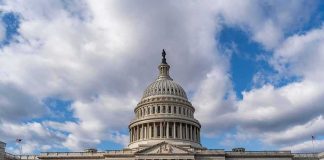

On America’s 250th birthday, Washington, D.C.’s sky became a battlefield between the biggest fireworks show in history and a system that still left many Americans feeling shut out and talked past.
Story Snapshot
- Freedom 250 organizers launched more than 800,000 fireworks over the National Mall in a record‑seeking display.
- President Trump’s late‑night speech and the 40‑minute show followed storm evacuations, confusion, and long delays.
- Media outlets highlighted chaos and politics, while organizers and many attendees saw a rare moment of shared pride.
- The fight over how to remember “Freedom 250” shows how even national milestones get pulled into elite power games.
A record‑seeking fireworks show that lit up the capital
Freedom 250 organizers promised a fireworks display the country had never seen before, and the numbers back that up. Their official materials described more than 850,000 pyrotechnic shells and effects, launched from ten locations around the National Mall, West Potomac Park, and barges on the Potomac River, far beyond a normal D.C. show. Independent coverage ahead of the event echoed that scale, with multiple outlets citing plans for well over 800,000 fireworks and a show lasting more than 30 minutes, nearly twice the usual length.
Local and national outlets reported that organizers were aiming to break the standing Guinness World Record set in the Philippines in 2016, when just over 810,000 fireworks were used in one show. The fireworks contractor confirmed that the goal was to surpass that 810,904‑shot benchmark. Video from the night shows a dense, continuous wall of color over the monuments, supporting accounts that the show stretched close to 40 minutes and was visible across much of the Washington region. For many on the Mall and watching online, the sheer scale felt like a once‑in‑a‑lifetime moment of national spectacle.
Storms, evacuations, and a delayed presidential speech
Hours before the fireworks, severe storms rolled over downtown Washington and forced authorities to shut down the core of the celebration. Around 7 p.m., officials evacuated the National Mall, sending tens of thousands toward shelters and nearby buildings while lightning and heavy rain moved through the area. Reports from the ground described confusion, full indoor sites, and long lines as people tried to figure out where to go, a familiar picture to Americans who feel government can shut things down but struggles to help people through the fallout.
Gates did not reopen until about 9:45 p.m., roughly two and three‑quarter hours after the evacuation began. People who wanted back onto the Mall had to clear security screening all over again, adding more time and frustration. President Donald Trump’s speech, originally slated for mid‑evening, did not begin until 11:15 p.m. and wrapped just before midnight. That delay meant some families with kids or long trips home missed either the remarks, the fireworks, or both, another example of how large federal events often work best for those with time, money, and patience to spare.
Trump’s message, a military show, and the meaning of patriotism
When President Trump finally took the stage on the National Mall, he framed the night as proof that “the American Dream is back” and cast the United States as a “nation of winners.” His speech praised veterans and American exceptionalism and also attacked communism and other ideologies he argued threaten the country’s core values. Supporters heard a strong defense of American strength and freedom. Critics argued that mixing campaign‑style themes into a 250th birthday event turned what could have been a unifying holiday into another partisan rally.
The program around the speech tried to fuse patriotic symbols most Americans still recognize. Plans called for what promoters labeled the “greatest aviation spectacle in history,” with military flyovers and aerobatic teams representing multiple branches of the armed forces. Weather forced some of those flyovers to be canceled or cut back, but earlier demonstrations still put fighter jets and heritage aircraft over the capital. Fireworks were choreographed to a live score performed by a joint military orchestra, pairing the visuals with classic patriotic music from musicians drawn from several services. Even here, though, the country’s divide appeared: some saw an inspiring show of national pride, while others saw tax‑funded political theater.
Media framing, distrust, and a shared sense the system is broken
Coverage of Freedom 250 split almost along tribal lines. Major outlets such as CNN, CBS, National Public Radio, and the BBC led with the storms, evacuation, and delay, giving less space to the scale of the fireworks or to people who felt the night still delivered on its patriotic promise. Other reporting and commentary, often from right‑leaning or independent sources, focused on the record‑seeking display and historic size of the show, accusing big media of downplaying anything that might reflect well on Trump or on a strong America message backed by fossil‑fuel‑powered fireworks.
That clash fits a broader pattern scholars have found around big “message events,” where news coverage tends to highlight conflict, disruption, and logistical failure over symbolic success. It also lands in a moment when many Americans on both left and right believe a small class of political, media, and corporate elites use even national holidays to push their own story about the country. For conservatives, that often means anger at “globalist” institutions and cultural agendas; for liberals, it means frustration with “America First” nationalism and deepening inequality. For both, Freedom 250 is another sign that even when the sky explodes in color, the people in charge still are not listening closely enough to the citizens on the ground.
Sources:
facebook.com, cnn.com, cbsnews.com, fox5dc.com, npr.org, bbc.com, nbcnews.com, freedom250.org, youtube.com, apnews.com