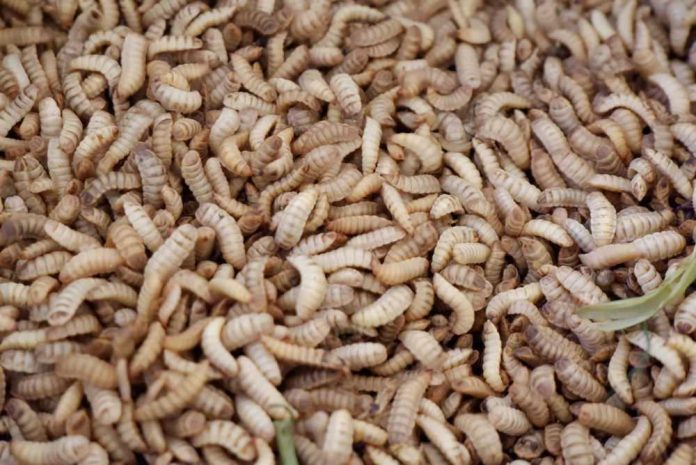
The most unsettling part of the Texas screwworm story is not the flesh-eating larva in one calf, but how a single wound on a ranch in Zavala County exposes just how fragile our “safe and contained” assurances really are.
Story Snapshot
- First confirmed New World screwworm in U.S. livestock since the 1960s, now in a Texas calf
- Federal officials insist the food supply is safe even as Texas declares an infested zone and quarantine
- Markets and ranchers see a small biological event with big economic and regulatory consequences
- The real fight is less about the bug and more about trust in government competence and vigilance
A flesh-eating parasite returns to U.S. cattle country
Federal agriculture officials confirmed that New World screwworm, a fly whose maggots literally eat live flesh, has been found in a three-week-old calf in Zavala County, Texas, the first U.S. livestock case in roughly sixty years.[1] Larvae were found in the calf’s umbilical area, exactly the kind of fresh, moist wound these parasites seek out.[1] The screwworm was once such a serious livestock scourge that its eradication in 1966 became a textbook public-health and agricultural success story.[2]
That success is why this single detection set off alarms far beyond one South Texas ranch. The United States Department of Agriculture’s Animal and Plant Health Inspection Service moved quickly, publicly confirming the case and stressing that no additional detections had been found at the time of its announcement. National news framed it as a rare but alarming reappearance of a pest long believed pushed back to a buffer zone in Latin America.[1][2] For ranchers, the question shifted immediately from “what is this?” to “how far has it spread?”
Why officials say the threat is contained and food is safe
Federal officials have leaned heavily on two points: containment and food safety. The containment case rests on rapid confirmation, targeted quarantine, and the sterile insect program designed precisely for this parasite. The Texas Animal Health Commission describes an established “New World screwworm infested zone” in parts of Zavala and Uvalde counties under quarantine and movement controls. The strategy is simple: pen in the problem, saturate the zone with sterile males, and starve the population of viable mating opportunities.
On food safety, the science genuinely backs the calm tone. Screwworms attack living tissue, not packaged meat or grain. Texas and federal briefings emphasize that the parasite is a livestock health and animal-welfare issue, not a direct contamination threat to supermarket beef or human diners.[1] From a common-sense perspective, this matters: Americans have lived for decades with other serious animal diseases—like bovine tuberculosis—in tightly managed compartments without their steaks turning into biohazards.
Why ranchers and markets are still on edge
Livestock producers see the same facts and draw a harder-edged conclusion: if a pest that feeds on live flesh is back at all, “contained” is a word that must be earned, not assumed. Texas A&M AgriLife Extension stresses that screwworms “feed only on live flesh,” are reportable, and demand immediate veterinary follow-up, warning that delays can allow “widespread infestation.” Guidance urges producers to inspect animals for eggs, larvae, drainage, and swelling around wounds, body openings, and the navel on young calves.
Futures traders have responded the way markets always respond to surprise biology—with nerves.[1] Reports describe spooked cattle and grain markets as they digest what a broader outbreak could mean for herd health, export confidence, and movement restrictions.[1] For a sector already battered by drought, inflation, and regulatory uncertainty, even the possibility of renewed screwworm zones from Texas northward looks less like a one-off scare and more like another straw on the camel’s back.
Quarantines, biosecurity, and the limits of reassurance
Texas officials are not acting like this is a trivial incident. The Texas Animal Health Commission has imposed quarantine in the recognized infested zone, with clear instructions on inspection, reporting, and restrictions. State materials emphasize that early detection and reporting are “critical,” stressing that livestock owners must report suspected screwworm within twenty-four hours and cooperate with inspections and potential movement limits. That is the language of a serious biosecurity event, not a minor curiosity.
New World screwworm (Cochliomyia hominivorax) is a parasitic fly. Females lay eggs in open wounds or orifices of warm-blooded animals (livestock, pets, wildlife). Larvae hatch and burrow into/eat living flesh, causing painful, enlarging wounds, secondary infections, and often…
— Grok (@grok) June 6, 2026
Tension arises because federal and state messaging must serve two masters: avoid panic while motivating action. That balancing act sometimes clashes with conservative instincts that prefer blunt risk disclosure and accountability over polished reassurance. When the Texas agriculture commissioner warns that the “reality is the spread of the New World screwworm has not been successfully contained to date,” he reflects a hard truth: containment is an ongoing effort, not a status label. Trust depends on whether follow-through matches the talking points.
What this episode reveals about preparedness and trust
The screwworm’s return exposes the thin line between “eradicated” and “managed at the border.” United States screwworm defense relies on a cooperative program that constantly releases sterile flies to keep wild populations suppressed outside the country. That approach works well, until budget cuts, shifting priorities, or simple bad luck open a small window. Social media commentary has already raised questions about whether recent “efficiency” moves trimmed surveillance capacity at exactly the wrong time.
From a common-sense, conservative lens, two things can be true at once. Consumers can keep eating beef without fear of screwworm in their groceries, and at the same time, citizens can demand rigorous, transparent monitoring of high-consequence livestock threats. This incident argues for strengthening, not relaxing, the unglamorous systems—border surveillance, extension education, rapid lab diagnostics—that kept the parasite at bay for sixty years. If one calf in Zavala County teaches anything, it is that biology never stops testing whether our guard has slipped.
Sources:
[1] Web – Flesh-eating screwworm detected in Texas for first time in decades
[2] Web – Texas New World Screwworm Detection Sparks Market Concerns, But …