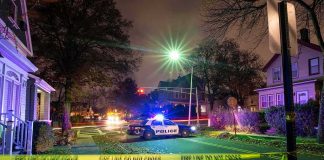
Armed confrontation erupted inside the Philippine Senate building on May 13, 2026, as international authorities moved to arrest a sitting senator wanted for crimes against humanity, exposing a dangerous collision between legislative immunity and international justice that threatens to ignite broader constitutional chaos.
Story Snapshot
- Volleys of gunshots rang through Philippine Senate halls as military personnel sought ICC-wanted Senator Ronald dela Rosa
- Former police chief dela Rosa faces crimes against humanity charges for his role in Duterte’s drug war that killed an estimated 20,000+ citizens
- Senator publicly called for citizens to mobilize and physically block his arrest after ICC unsealed warrant
- Philippine Supreme Court now determining whether legislative immunity shields senators from international criminal prosecution
- Incident mirrors 2025 arrest of former President Duterte, already awaiting trial at The Hague on identical charges
International Warrant Triggers Senate Standoff
The International Criminal Court unsealed an arrest warrant for Senator Ronald dela Rosa on May 11, 2026, charging the 64-year-old former Philippine National Police chief with crimes against humanity. Dela Rosa immediately took refuge in his legislative office and posted on Facebook urging supporters to prevent his extradition to The Hague. The 2025 arrest of his mentor, former President Rodrigo Duterte, established precedent for prosecuting architects of the drug war that human rights organizations document resulted in over 20,000 deaths through extra-judicial killings between 2016 and 2022.
Armed Military Forces Storm Legislative Building
More than ten military personnel in camouflage fatigues carrying assault rifles entered the Senate building on the evening of May 13. Eyewitness accounts from Reuters and Associated Press journalists present confirm volleys of gunshots echoed throughout the Senate halls, forcing staff and senators to run for cover. Senate Secretary Mark Llandro Mendoza confirmed no casualties occurred, though authorities have not disclosed who discharged the firearms or under what authorization military forces breached the traditionally protected legislative premises.
Constitutional Crisis Over Legislative Immunity
The Philippine Constitution grants sitting senators immunity from arrest during legislative sessions, creating legal ambiguity when international criminal warrants target protected lawmakers. The Senate itself requested military assistance, complicating questions about whether the institution cooperated with enforcement or attempted to maintain sovereignty over its premises. The Philippine Supreme Court has now assumed jurisdiction to determine whether constitutional immunity provisions supersede international criminal justice obligations, a ruling that will establish precedent for future ICC enforcement within countries maintaining legislative privilege protections.
Accountability Versus Political Protection
Dela Rosa oversaw police operations as PNP chief during the bloodiest phase of Duterte’s anti-drug campaign, publicly defending tactics that international observers characterized as systematic human rights violations. His prosecution represents accountability advocates’ efforts to achieve justice for thousands of victims’ families. However, pro-Duterte factions view the ICC intervention as foreign interference in domestic affairs, mobilizing public resistance to arrests. This confrontation tests whether democratic institutions prioritize rule of law or protect political allies from consequences, a question resonating with citizens frustrated by perceived elite impunity regardless of ideological alignment.
Broader Implications for International Justice
The gunfire incident demonstrates practical challenges international courts face enforcing warrants in countries where domestic legal protections shield high-ranking officials. Previous ICC cases involving legislative immunity in Sudan and Uganda showed similar enforcement obstacles. The Philippine situation carries heightened significance because it involves a functioning democracy with established separation of powers, not an authoritarian regime. The outcome will influence how other nations with parliamentary immunity provisions respond to international criminal prosecution, potentially strengthening or undermining the ICC’s credibility as an effective accountability mechanism for mass atrocities.
Sources:
Chaos at Philippine Senate Amid ICC Arrest Warrant Drama – Devdiscourse
Gunshots Fired at Philippine Senate Amid ICC Arrest Chaos – The Jerusalem Post
Gunshots Fired as Chaos Erupts at Philippine Senate – South China Morning Post