A family tragedy in North Carolina has turned into a warning story about how fast “trusted friends” can weaponize inside access when a household can’t defend itself.
Story Snapshot
- Iredell County investigators allege people close to NASCAR Hall of Famer Greg Biffle and his wife exploited the days after the family’s fatal plane crash to access and drain accounts.
- According to search-warrant filings, suspicious activity began the day after the crash and involved changes to passwords, emails, and phone numbers—details suggesting intimate personal knowledge.
- A Jan. 7–8, 2026 break-in at the family’s Mooresville home allegedly targeted cash, firearms, and financial information, with the intruder spending hours inside and avoiding cameras.
- As of May 1, 2026, authorities reported no arrests and said investigators still needed more evidence to formally link suspects across the fraud and burglary allegations.
Investigators allege an “inside” plan executed immediately after the crash
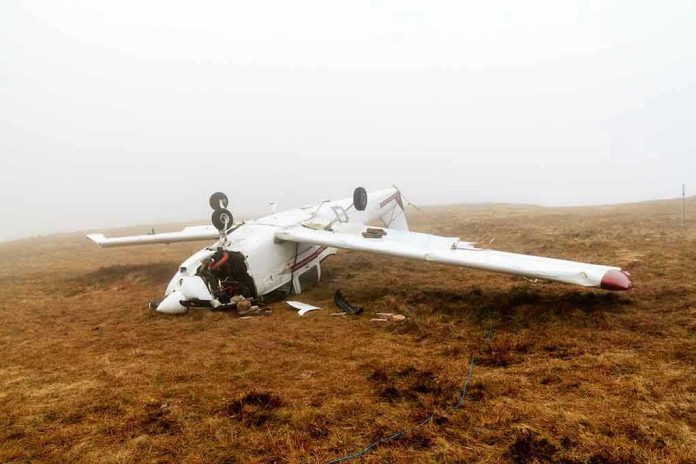
Iredell County Sheriff’s investigators say the suspected theft began almost instantly after the Dec. 18, 2025 plane crash at Statesville Regional Airport that killed Greg Biffle, his wife Cristina Grossu, their children Ryder (5) and Emma (14), and three others. Search-warrant documents described account takeovers and suspicious transactions starting the next day. Investigators said the activity included changes to emails, phone numbers, and passwords—moves that typically require personal identifiers and insider familiarity.
The warrants described what detectives viewed as coordinated steps across multiple financial tools, including bank accounts and Venmo, with access attempts spanning more than one state. Investigators also pointed to a fraudulent check cashed from a Biffle business account as part of the alleged scheme. Authorities have not publicly detailed the total amount believed stolen beyond describing “hundreds of thousands,” and they have not announced charges, underscoring that the case remains in the evidence-gathering phase.
The Mooresville home break-in becomes a second, more personal violation
Investigators also outlined a burglary at the Biffles’ Lake Norman-area home in Mooresville on the night of Jan. 7 into Jan. 8, 2026. According to the warrant narrative, an intruder spent nearly six hours inside while avoiding cameras and took about $30,000 in cash, NASCAR memorabilia, and financial information. The report also said two Glock handguns were stolen—an especially sensitive detail for many Americans who see lawful gun ownership as a basic self-defense right and a core part of home security.
The break-in details added to the “inside job” theme because investigators said the intruder appeared to understand the home’s layout and how to move around without triggering detection. Documents described the burglary as potentially designed to remove or obscure evidence tied to the alleged financial fraud. While the warrants raised that possibility, law enforcement has been careful in public statements, signaling the difference between investigative theory and what can ultimately be proven beyond a reasonable doubt in court.
Who are the suspects, and why hasn’t there been an arrest?
Reports citing the warrants describe suspects as people within the family’s circle, including a woman described as Grossu’s friend and her husband. Investigators said the woman attended a Dec. 16 celebration-of-life gathering and was later linked to surveillance connected to the home break-in, while license plate reader data reportedly placed the husband’s truck nearby. Separately, coverage also identified Aaron Lloyd—described as a former co-pilot and Hurricane Helene relief associate—as being under scrutiny connected to estate theft allegations.
Parallel legal fights and an ongoing federal crash probe complicate the aftermath
The crash itself remains under National Transportation Safety Board investigation, and lawsuits have also emerged from survivors of other crash victims seeking millions from the estates. That matters because estate assets can be tied up, contested, or frozen while courts sort out competing claims. When alleged fraud or burglary enters the picture, families and administrators may have to spend more money proving what was taken, where it went, and who had access—exactly the kind of slow, paperwork-heavy grind that leaves ordinary Americans feeling the system serves whoever can afford the most lawyers.
Why this story resonates far beyond NASCAR
The core allegation is simple and disturbing: people close enough to know birthdays, Social Security numbers, and routines allegedly moved in when a family could no longer protect itself. For conservatives who already distrust entrenched institutions, this case also highlights a more everyday vulnerability—how digital banking, app-based payments, and loose identity controls can be exploited quickly after a death. For Americans on the left and right who feel the “rules” don’t protect regular people, the lack of arrests so far will be watched closely as investigators build their case.
Authorities have emphasized the investigation is ongoing, and the sheriff’s office has publicly signaled caution about formally tying the burglary to the financial fraud without more proof. That restraint is important: allegations in warrants can be strong leads, but the standard for charges and conviction is higher. Still, the timeline described in court filings—fraud beginning the day after the crash and a subsequent hours-long home invasion—has already become a stark reminder that personal trust and basic account security can fail at the worst possible moment.
Sources:
Friends allegedly stole Greg Biffle’s wealth after plane crash. What to know
Police believe friends stole from Greg Biffle after death
Who is Aaron Lloyd? Greg Biffle friend accused of stealing thousands after his plane crash death
Friends allegedly stole Greg Biffle’s wealth after plane crash. What to know
After NASCAR’s Greg Biffle and family died, police now think ‘friends’ stole from them