
Washington is moving to rewrite the rules of college sports from the White House—an extraordinary federal power play that could either restore order or invite a new wave of lawsuits and bureaucracy.
Quick Take
- Power Four commissioners publicly praised President Trump’s “Saving College Sports” roundtable and urged Congress to pass a national framework.
- The commissioners endorsed the bipartisan SCORE Act, aiming for uniform rules on athlete benefits, competitive fairness, and protection for women’s and Olympic sports.
- Trump announced five working committees plus an Oversight Committee, with meetings slated to begin the following week.
- Key uncertainties remain, including what a new executive order would actually change without Congress and how athlete voices will be incorporated.
Power Four commissioners rally around Trump’s White House push
Big Ten commissioner Tony Petitti, ACC commissioner Jim Phillips, Big 12 commissioner Brett Yormark, and SEC commissioner Greg Sankey issued a joint statement praising President Donald Trump’s White House roundtable on college sports. The commissioners framed the event as a practical step toward preserving both athletic and academic opportunities for student-athletes. They also pointed lawmakers toward the SCORE Act as the kind of national standard they say can restore basic order across conferences and states.
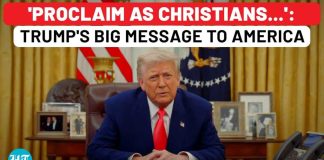
Trump’s involvement stands out because the roundtable drew roughly 50 leaders across college sports and politics, signaling that the administration wants federal leverage in a space historically governed by the NCAA, courts, and state legislatures. The commissioners’ statement emphasized enforceable rules and fair competition, reflecting a growing frustration that fragmented state NIL laws and inconsistent enforcement have turned recruiting and roster management into a regulatory maze that benefits lawyers more than athletes.
Why Washington is involved: NIL chaos, transfers, and court-driven policymaking
College athletics has been drifting toward a pay-for-play model since the Supreme Court’s 2021 NCAA v. Alston decision opened the door to broader compensation structures. That shift accelerated NIL collectives, intensified transfer-driven roster churn, and encouraged lawsuits pushing to classify athletes as employees. With the legal system effectively setting policy, many administrators argue that non-revenue sports and smaller programs become collateral damage when budgets tighten and competitive spending spirals.
Power Four conferences also operate in a financial universe that makes “status quo” unrealistic. With massive media agreements and the stakes of playoff access, leaders are seeking a nationwide ruleset that can preempt the patchwork of 30-plus state approaches and reduce constant litigation risk. That is where federal legislation becomes attractive: it could standardize NIL rules, define eligibility and transfer parameters, and clarify employment status in ways that courts and statehouses have not.
Trump’s committees and the SCORE Act: what’s on the table
After the roundtable, Trump announced the creation of five committees—covering legislation, rules, NCAA reform, media, and player issues—plus a President’s Oversight Committee. Reports described prominent stakeholders participating, including commissioners and well-known coaches, with meetings planned to start the next week. The committees are expected to collect recommendations that could shape federal legislation and possibly a new executive order, though executive authority is inherently limited without Congress.
The commissioners pointed to the bipartisan SCORE Act as a central vehicle for reform. Their statement highlighted goals that resonate with families and taxpayers who still want college sports tied to education: elevated benefits for athletes, fair national competition, protections for women’s and Olympic sports, and rules that can actually be enforced. The practical question is how Congress writes those protections without creating loopholes, unintended mandates, or another expensive federal bureaucracy supervising campus life.
A missing piece: athlete representation and the risk of backlash
One of the most notable details from coverage of the roundtable and initial committee structure is the absence of current college athletes, with player representatives expected to be added later. That sequencing matters because reforms that tighten transfers, limit NIL arrangements, or define athletes as non-employees will be challenged if they are seen as rules imposed “on” athletes rather than negotiated “with” them. Any settlement-style approach that lacks buy-in could trigger fresh lawsuits and delay stability.
For conservatives who are weary of government overreach, the political tension is real: federal action could stop the state-by-state chaos, yet Washington solutions often expand regulatory power and invite permanent lobbying. The strongest case for a narrow federal framework is clarity—uniform definitions, consistent enforcement, and fewer courtroom policy shifts. The weakest case is that a rushed deal could lock in bad incentives, pick winners and losers, or empower unelected rule-makers for years.
What to watch next: executive order limits and Congress’s role
Trump previously signed an executive order on college sports in July 2025, and coverage indicates he is signaling another one. The big limitation is that an executive order cannot grant antitrust protection or permanently preempt state NIL statutes the way Congress can. That makes the committees’ legislative track the real battleground, especially if lawmakers try to balance competitive fairness, women’s sports protections, and athlete compensation without turning universities into minor-league franchises.
Until Congress acts, college sports will remain vulnerable to court rulings, state-law conflicts, and constant rule changes that punish fans and families with higher costs and less transparency. The White House can convene and pressure, but stable reform ultimately depends on statutes that survive legal scrutiny and respect constitutional boundaries. If Washington delivers clear, limited rules, it could restore sanity. If it overreaches, the “fix” may become another endless fight—this time in federal court.
Sources:
Autonomy Conference Commissioners Statement on College Sports Roundtable
President Trump college sports reform committees NIL