

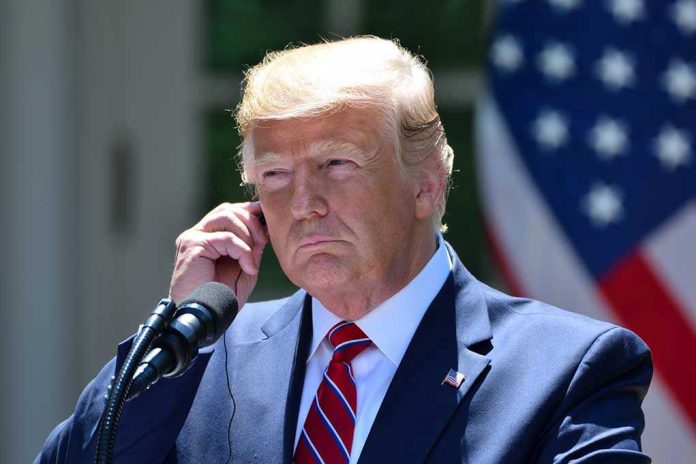
A new tariff threatens to escalate tensions with Mexico over water rights, potentially impacting Texas farmers.
Story Highlights
- Trump threatens a 5% tariff on Mexican goods due to water delivery shortfalls under a 1944 treaty.
- The U.S. claims Mexico owes over 800,000 acre-feet of water, critical for Texas agriculture.
- Mexico cites drought and infrastructure limits as reasons for noncompliance.
- Potential tariffs could strain U.S.-Mexico trade relations.
Trump’s Tariff Threat Amid Treaty Dispute
President Trump has announced a potential 5% tariff on Mexican goods in response to Mexico’s failure to deliver water under the 1944 U.S.-Mexico Water Treaty. This move is framed as a defense of Texas farmers, who have faced significant water scarcity and crop losses. Trump demands that Mexico release at least 200,000 acre-feet of water by the end of the year to avoid the tariff. The State Department supports this stance, highlighting the severe impact on Texas agriculture.
Mexico’s President Claudia Sheinbaum acknowledges the treaty obligations but points to severe drought and limited pipeline capacity as reasons for the shortfall. She maintains that the deficit is not due to ill intent and believes that increased rain will help meet some of the obligations before the year’s end.
Impact on U.S. and Mexico Relations
The proposed tariff, if implemented, could exacerbate tensions between the U.S. and Mexico, affecting bilateral trade under the USMCA agreement. The tariff threat is consistent with Trump’s approach to using economic leverage on non-trade issues. This strategy aims to compel Mexico to comply with the treaty, but it risks straining diplomatic and economic relations.
Texas farmers are particularly vulnerable, as they rely heavily on water from the Rio Grande for their crops. The ongoing drought has already led to significant agricultural losses, and the shortfall in water deliveries exacerbates these challenges. The threat of tariffs adds a layer of complexity, potentially disrupting cross-border supply chains and increasing costs for consumers.
Future Implications for Water Management
The use of tariffs as a tool to enforce water treaty compliance sets a precedent that could alter future water management strategies. This approach may politicize the role of the International Boundary and Water Commission, complicating efforts to manage shared water resources. As climate change continues to affect water availability, both countries may need to renegotiate treaty terms to address new challenges.
In the long term, Texas and northern Mexico might have to adapt by changing crop patterns, improving irrigation efficiency, and investing in infrastructure to mitigate water scarcity. The political dynamics surrounding this issue could also influence future trade and diplomatic relations between the U.S. and Mexico.
Trump Vows that Texas Farmers Won’t Be Cheated, Slaps Mexico with Tariff over Broken Water Deal https://t.co/VIZhhjeSLL via @BreitbartNews
— Jim Polk 🇺🇸 (@JimPolk) December 9, 2025
The ongoing dispute highlights the complex interplay between trade policy and resource management, raising questions about how best to balance economic interests with environmental and diplomatic considerations.
Sources:
Mexico faces new tariff threat from Trump over water debt