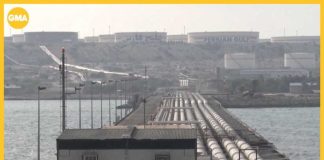

Iran’s escalating threats against U.S. Navy warships in the Persian Gulf spotlight a dangerous confrontation brewing after President Trump ordered a military buildup following devastating strikes on Tehran’s nuclear facilities, yet history suggests America’s defense systems will hold the line against another rogue regime’s desperate posturing.
Story Snapshot
- USS Abraham Lincoln carrier strike group deployed to Persian Gulf with approximately 10 warships amid Iranian threats of retaliation for nuclear site strikes
- President Trump authorized “armada” deployment following 12-day bombing campaign that destroyed Iran’s Fordow, Natanz, and Isfahan nuclear facilities
- Iran threatens missile, fast-attack boat, and submarine strikes against U.S. forces, but analysts cite successful defense against hundreds of Houthi attacks as proof of American superiority
- U.S. maintains approximately 50,000 troops in Middle East region with F-15E jets reinforcing carrier group capabilities
Trump’s Decisive Response to Nuclear Threat
President Trump deployed the USS Abraham Lincoln carrier strike group to the Persian Gulf region following a successful 12-day military campaign that crippled Iran’s nuclear infrastructure. The operation involved U.S. B-2 stealth bombers and Israeli aircraft striking three critical nuclear sites at Fordow, Natanz, and Isfahan with bunker-busting munitions. Trump announced the deployment as an “armada” at the World Economic Forum, signaling American resolve to prevent Iran from obtaining nuclear weapons. The massive 97,000-ton carrier hosts more than 65 aircraft and operates alongside guided-missile destroyers, representing overwhelming firepower projection that serves American security interests and regional stability.
Iranian Threats Ring Hollow Against Proven Defenses
Iranian military officials responded to the carrier deployment with aggressive rhetoric on social media, threatening “more decisive and painful responses” to American and Israeli operations. Iran’s top naval commander posted warnings about safeguarding territorial integrity, while defense ministry spokesmen echoed similar themes. The Islamic Revolutionary Guard Corps possesses fast-attack boats, anti-ship missiles, and Kilo-class submarines theoretically capable of asymmetric warfare. However, these threats mirror failed tactics previously employed by Iran’s Houthi proxies in Yemen, who launched hundreds of drone and missile attacks against U.S. ships in the Gulf of Aden and Red Sea throughout 2024-2025 without sinking a single vessel or causing significant damage.
Geographic Reality Limits Tehran’s Options
Defense analysts assess Iran’s actual capability to strike U.S. naval forces as severely constrained by geography and proven American defensive systems. The Persian Gulf’s shallow waters limit submarine effectiveness, particularly for Iran’s aging Kilo-class vessels designed for deeper operations. U.S. carrier strike groups maintain layered defense networks including advanced radar, electronic warfare capabilities, and interceptor missiles that successfully defeated intense Houthi attack campaigns. The carrier group’s destroyers provide overlapping protective zones that make penetration extremely difficult. These realities explain why betting markets and military observers assign low probability to successful Iranian strikes despite Tehran’s bluster, recognizing that propaganda value exceeds actual military capability in this confrontation.
Strategic Implications for American Strength
The deployment demonstrates how President Trump’s administration leverages military superiority to achieve diplomatic objectives without appeasement or weakness. Approximately 50,000 U.S. troops stationed throughout the Middle East provide additional deterrence alongside the carrier group and reinforcing F-15E fighter jets. This force posture pressures Iran toward negotiations for a nuclear agreement excluding weapons development, following the successful dismantling of key enrichment facilities. The strategy builds on recent American successes in Venezuela operations that boosted confidence in decisive military action. Unlike previous administrations that tolerated Iranian aggression and financed Tehran’s terrorism through sanctions relief, Trump’s approach combines overwhelming force with clear demands, protecting American interests and regional allies while demonstrating that threats against U.S. forces carry severe consequences for hostile regimes.
Sources:
World War III? Iran Has Options to Strike a U.S. Navy Supercarrier