

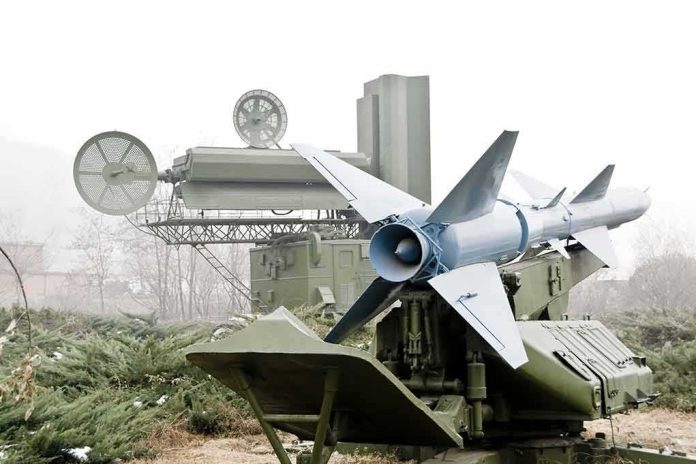
Russia’s S-400 can likely spot stealth jets at long range, but turning that into a kill remains unproven.
Story Snapshot
- Russia advertises the S-400 as a stealth killer, with layered radars and long-range missiles.
- Low-frequency radars can detect stealth jets, but often lack targeting precision for a missile shot.
- Swedish analysis says effective range against low-flying fighters can drop below 20 kilometers.
- No verified combat has shown an S-400 tracking and engaging an F-22 or F-35 end-to-end.
What the S-400 Was Built to Do
Russian designers built the S-400 to guard large areas and threaten aircraft far away. Public specs say it fuses a search radar, a fire-control radar, and long-range missiles into one network. Supporters claim this includes detecting stealth aircraft like the F-35. Those claims rest on mixing different radar bands and missile types to build a complete “kill chain” from first sight to intercept. That design, on paper, gives defenders options across ranges and target types.
Technical write-ups describe how the system spreads tasks across sensors and weapons. A long-range radar searches wide areas and cues a separate engagement radar to refine a track. Long-range missiles then fly toward the target with data updates. Advocates argue that very high frequency and ultra high frequency radars can notice stealth shapes even if a high-frequency radar struggles at distance. The idea is simple: use one radar to find, another to target, and a missile to finish.
The Detection-To-Kill Gap
Independent analysts draw a sharp line between detection and an actual shot. They report that low-frequency radars may see a stealth jet’s rough position, yet not deliver the precise, “weapons-quality” track a missile needs. That precision usually comes from higher-frequency radars, which stealth designs are meant to defeat at range. This is the core gap in public debates: seeing “something” is not the same as guiding a missile to it.
The Swedish Defence Research Agency adds another brake on big claims. Its memo explains that the S-400’s headline 400-kilometer reach does not equal a reliable engagement range against fighters flying low. Terrain, earth curvature, and altitude can cut detection and tracking. Under some conditions, the effective range may shrink below 20 kilometers. That sharp drop matters to pilots and planners more than brochure numbers do.
What We Still Do Not Know
Public records show no verified case where an S-400 detected, tracked, targeted, and fired on an F-22 or F-35 through the full chain. Analysts note that such proof would need logs, modes, geometry, and seeker data. Without that, the strongest claims remain untested in combat. That uncertainty fuels hype on both sides and leaves citizens sifting ads, not evidence, in a high-stakes debate.
Some reports also describe tactics that could limit the system. Electronic attack, decoys, and saturation can force radars to split focus. Stealth pilots can use terrain, timing, and aspect to cut exposure. Even a long-range missile may rely on its own seeker only late in flight, which has a much shorter effective range. Each step is a chance for error, noise, or countermeasures to break the chain before a hit.
Why This Matters Beyond Tech Specs
Taxpayers hear big promises from defense firms and foreign states and then watch the bill rise. Voters on the right and left share a worry: glossy claims often outrun proof, while leaders ask for more money and trust. The S-400 story fits that pattern. The system may be dangerous in the right setup, yet its top claims against America’s stealth fleet remain unverified in combat. Citizens deserve facts, not slogans.
Israel's Channel 14 is reporting that there are OVER 80 U.S. KC-135 Refulers Deployed and Ready in Israel. So how many aircraft could they refuel?.Could they stay in the air long enought to refuel a number of trips
📷📷📷With a reported fleet of over 80 U.S. aerial tankers…
— Paul Malley (@PaulMalley19) October 31, 2026
Strategists care because real ranges shape war plans, not headlines. If detection does not become a precise track, stealth jets keep the edge. If a defender nets many sensors and preserves its network, the sky grows riskier. The truth is conditional: tactics, terrain, training, and electronic warfare decide outcomes. Until verified records close the evidence gap, treat both boasts and taunts with caution—and demand transparent, testable data.
Sources:
wikiwand.com, strasam.org, foi.se, team-bhp.com, popularmechanics.com