

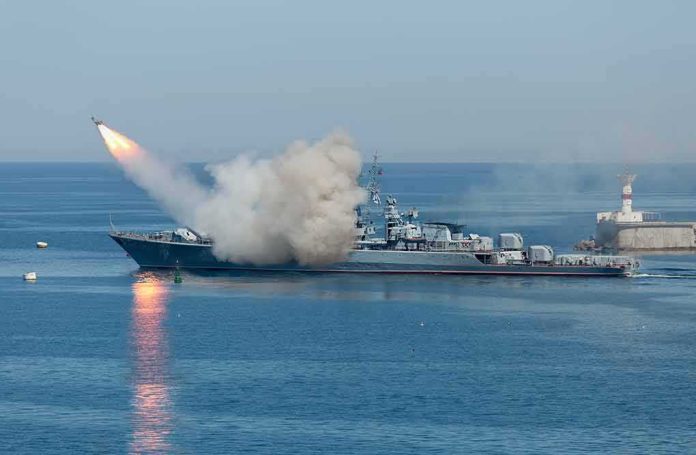
Russia put nuclear weapons on the table over Kaliningrad, raising the risk that a local dispute could spiral into a global disaster.
Story Snapshot
- Russia warned it could use nuclear weapons if NATO tries to isolate Kaliningrad.
- NATO leaders called the message reckless and said there is no imminent threat to alliance territory.
- Experts say this looks like coercive signaling, not a sign of an imminent strike.
- The danger comes from miscalculation as military and hybrid tensions rise in the Baltic region.
What Russia Said And Why It Matters
Russia sent a written warning to North Atlantic Treaty Organization members saying it would be ready to use its “entire arsenal,” including nuclear weapons, if allies attempt to cut off the Kaliningrad region from the rest of Russia. The message drew a hard red line around the small exclave between Poland and Lithuania. Kaliningrad hosts major Russian forces and sits on the Baltic Sea. The warning ties nuclear use to a specific trigger, not a first strike without cause.
President Vladimir Putin reinforced the point in public remarks. He said Russia would use all weapons at its disposal if it considers Kaliningrad under attack. Moscow has also accused the alliance of planning a blockade, while asserting it would hit “decision-making centers” if war starts, according to advocacy and media summaries. None of these claims came with proof of new deployments that would suggest Russia is preparing to launch soon.
How NATO And European Officials Responded
NATO leaders rejected Moscow’s warning and urged calm. NATO Secretary-General Mark Rutte said there is no imminent threat to NATO territory and called on Russia to stop nuclear threats. A NATO spokesperson said the alliance is defensive and that its activities pose no risk to Russia, condemning irresponsible nuclear rhetoric. A Latvian minister also said he did not see an immediate threat, while pointing to ongoing hybrid pressures as the main concern.
This pushback aims to deny Russia political gains from fear. It also tries to lower the chance of mistakes. Officials stressed that the alliance is not preparing to isolate Kaliningrad, a step that could spark conflict. Independent analysts cited by media echoed that view and warned that any nuclear use could trigger rapid retaliation and catastrophic escalation. The message to the public is simple: stay alert, but do not panic.
Signal Or Imminent Danger? What The Record Shows
Scholars who track nuclear threats say most Russian nuclear talk since 2022 has been coercive signaling, not a sign of imminent use. They watch for costly steps like moving nuclear units, dispersing forces, or changing alert levels. Reports on this episode highlight a formal warning linked to a hypothetical blockade. They do not show visible force changes that would point to a near-term launch. That gap suggests signaling designed to deter, not to start a nuclear exchange.
Still, risk is real. More planes, ships, drones, and cyber tools in tight spaces raise the odds of a bad bounce. A Kyiv-based analysis warned that military buildups, repeated airspace incidents, sabotage, and explicit nuclear talk around Kaliningrad increase the chance of miscalculation. That is how great-power wars have started in the past—through small sparks in crowded theaters. The public sees the danger while elites trade statements.
Why Americans Should Care Right Now
Supply lines, trade routes, and energy flows in the Baltic tie back to prices at home. A crisis there could rattle markets, push fuel costs up, and distract leaders from fixing problems families feel every day. Washington says it stands by allies, but voters also expect clear goals, steady signals, and a plan to avoid accidental war. Responsible statecraft means reducing noise, setting guardrails, and keeping channels open when tempers run hot.
🇷🇺☢️ Russia warns NATO it would use "all weapons," including nuclear, if Kaliningrad is cut off or attacked
Russia delivered a diplomatic note to NATO, publicized by Russian embassies including in Ireland, saying it "will be ready to use the entire arsenal of forces and… pic.twitter.com/4eZoA8IRqe
— 🔥🗞The Informant (@theinformant_x) October 2, 2026
The bottom line is stark. Russia’s warning is a political weapon. NATO’s reply is a call for restraint. The space between them is where accidents happen. Citizens on the right and left share the same ask of their leaders: protect the nation, tell the truth, and do not stumble into a conflict that serves the powerful while risking everyone else. Vigilance and verification—not panic—are the tools that keep this red line from becoming a tripwire.
Sources:
theamericanconservative.com, reuters.com, cnn.com, icanw.org, washingtonpost.com, rferl.org, foxnews.com, yahoo.com, eng.globalaffairs.ru