

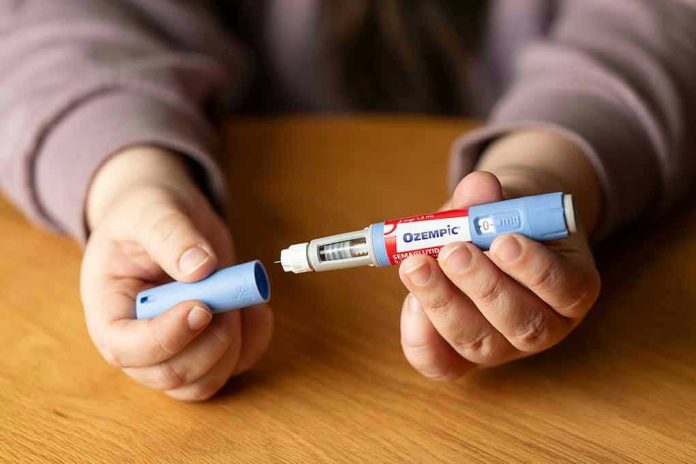
FDA clears popular weight-loss drugs of suicide risk warnings, delivering a win for science-based regulation over fear-mongering alarms that scared Americans from effective obesity treatments.
Story Snapshot
- FDA requests removal of suicidal ideation warnings from GLP-1 drugs like Wegovy and Zepbound after massive review shows no elevated risk.
- Decision based on meta-analysis of 90+ trials (108,000 patients) and 2.25 million patient records, prioritizing hard data over 2023 scare reports.
- Harmonizes labels with diabetes versions like Ozempic, ending inconsistencies from outdated fen-phen era precautions.
- Novo Nordisk welcomes move, affirming safety under medical supervision amid booming demand.
FDA’s Evidence-Driven Decision
On January 13, 2026, the FDA issued a Drug Safety Communication directing manufacturers to remove suicidal behavior and ideation warnings from weight-loss GLP-1 receptor agonists. The agency reviewed meta-analyses from over 90 clinical trials involving 108,000 patients and Sentinel System data on 2.25 million patients. These studies compared GLP-1 drugs to SGLT2 inhibitors and found no increased suicide risk. This action resolves probes started in mid-2023 after postmarketing reports surfaced.
Background on Warnings and Scrutiny
GLP-1 drugs mimic the GLP-1 hormone to control blood sugar and appetite, first approved for type 2 diabetes and later obesity with Wegovy in 2021 and Zepbound in 2023. Weight-loss labels carried suicide warnings based on 1990s drugs like fenfluramine, not GLP-1 specific evidence. Sporadic 2023 reports triggered FDA and EMA investigations. A January 2024 preliminary review noted data limits but no clear link, leading to this comprehensive 2026 confirmation.
Stakeholders Respond to Label Changes
The FDA leads as regulator, motivated by evidence-based public health protection. Novo Nordisk, maker of Saxenda and Wegovy, endorsed the request, stating it aligns with their safety data under professional care. Eli Lilly, producer of Zepbound, has not commented publicly. Manufacturers must update labels promptly as application holders. This collaborative surveillance via systems like Sentinel balances oversight with industry input, fostering trust in blockbuster treatments.
Patients with obesity often face depression from stigma or antidepressants, making clear guidance vital. Providers benefit from consistent labeling matching diabetes GLP-1s like Ozempic, which never had these warnings. This reduces confusion and supports access to therapies combating America’s obesity epidemic.
Impacts and Broader Implications
Short-term, the change boosts doctor confidence and patient adherence, countering social media fears. Long-term, it standardizes labeling, cuts litigation from outdated alerts, and sets data-driven precedents. Economically, it bolsters the $100 billion GLP-1 market for Novo and Lilly. Socially, it fights misinformation; politically, it upholds science-led FDA actions under President Trump’s administration, prioritizing American health over alarmism.
Sources:
Washington Times: FDA asks that suicide warning labels be taken off GLP-1 weight-loss drugs
Axios: FDA wants suicide warnings removed from some weight-loss drugs like Wegovy and Zepbound
BioSpace: FDA Asks Novo, Lilly to Remove Suicide Warnings from GLP-1 Weight-Loss Products
ABC News: Popular weight-loss drugs carry suicide warnings, FDA says they shouldn’t
FirstWord Pharma: Related GLP-1 update