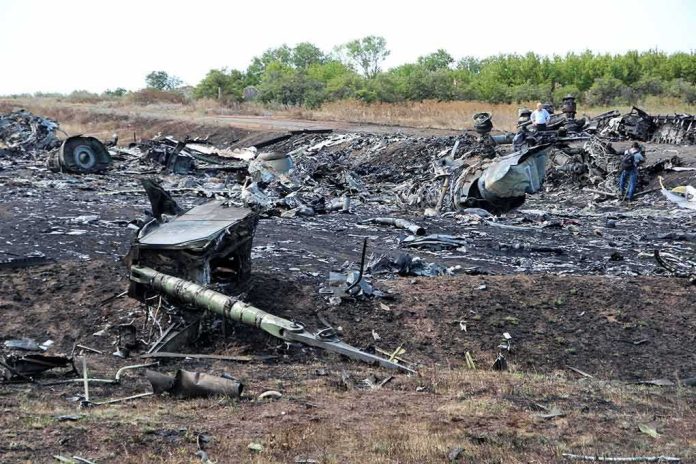
A Nigerian Air Force ATR-42 crashed near a naval base in Ondo State, killing all 32 people on board, according to official statements.
Story Highlights
- Officials say 25 passengers and 7 crew died after an ATR-42 crashed near Igbokoda.
- The aircraft was on a routine mission from Benin to Lagos when it went down.
- Search-and-rescue teams located the wreckage and mounted recovery efforts.
- President Tinubu ordered a thorough investigation into the crash.
What Happened and Where
Nigerian officials confirmed that a Nigerian Air Force ATR-42 aircraft crashed on Monday near Igbokoda in Ondo State, close to a naval base. Authorities stated that all 32 people on board died. The Presidency described the crash as occurring during a routine mission and said the victims were service members on duty. The location, near coastal waterways and marsh, made access hard for first responders, but teams reached the site and began coordinated recovery work led by the military and emergency agencies.
Government statements detailed the flight path as Benin to Lagos, a short domestic route often used for military logistics and surveillance. Aviation Minister Festus Keyamo said preliminary information showed 25 passengers and seven crew members were aboard. Early alerts focused on locating the wreckage and checking for survivors. Later that day, President Bola Tinubu announced that all 32 on board had died, and he ordered a full investigation to find the cause and prevent a repeat.
Rescue Efforts and Official Response
Search-and-rescue teams located the wreckage and began operations soon after the crash. The Nigerian Air Force said it activated immediate rescue efforts with support from other authorities. The area’s terrain slowed work but did not stop it. The Presidency and defense officials pledged transparency while the investigation proceeds. Officials did not release a cause, and they cautioned that investigators need time to review flight data, maintenance records, and crew actions before sharing findings with the public.
Press reports identified the aircraft as an ATR-42 configured for maritime or surveillance roles. Media accounts and official briefings described a controlled response, with cordons around the scene and military leadership directing next steps. Coverage varied in the first hours, with some outlets waiting on casualty details. By evening, statements from the Presidency and ministry clarified that there were no survivors and that the mission originated in Benin and was bound for Lagos Murtala Muhammed International Airport.
Why This Matters Beyond Nigeria
This crash highlights global concerns about military flight safety, maintenance, and oversight. In many countries, military accident probes sit inside defense chains of command. Civilian safety bodies assist only when invited, which can slow outside review. Nigerian reporting reflects that pattern. The Nigerian Safety Investigation Bureau said it can help with lab analysis of flight data and voice recordings if asked, but the Air Force leads because it is a military aircraft. That structure often delays public closure after deadly events.
For American readers, this story underlines a basic point: when institutions police themselves, the public often waits longer for answers. People on both the right and the left worry about guarded bureaucracies and slow releases of facts. Those concerns track here. Officials owe clear records: the manifest, radio logs, maintenance history, and findings on crew training and parts. Those items can show whether age, upkeep, weather, or human error played a role—and how to fix gaps before the next flight.
The Path to Answers
Investigators will likely begin with three tracks: the airframe and engines; the crew’s actions and training; and the mission’s planning and route. They will pull maintenance logs and parts histories, check recent repairs, and look for any safety bulletins tied to the ATR-42. They will match those records with flight data and cockpit audio if recoverable. They will also review weather, air traffic control logs, and radar tracks to build a minute-by-minute timeline of the final flight.
#BREAKING A Nigerian military ATR-42 aircraft flying from Benin City to Lagos crashed on Monday in southwestern Ondo state, killing all 25 passengers and seven crew members on board.#Nigeria #Crash #Plane #ATR42 pic.twitter.com/EKCACgrGEJ
— Dev Raj Joshi (@Devrajjoshi1947) October 6, 2026
Public trust grows when governments release solid evidence. In this case, that means sharing the final report, with data tables and clear narrative, not just a summary. Nigeria’s leaders have promised a thorough probe. Families deserve more than words. So do crews who fly similar missions tomorrow. Releasing the findings, within security limits, can save lives by exposing weak links and forcing change, from budget choices to training standards and fleet upgrades.
Sources:
allafrica.com, ndtv.com, dw.com, newindianexpress.com, aljazeera.com, gulfnews.com, aerotime.aero, straitstimes.com