

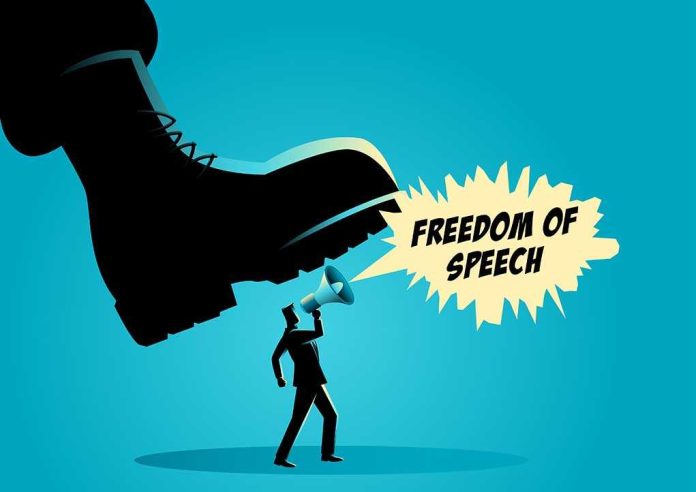
A new law in India raises alarms over free speech as Karnataka enacts its first “Hate Speech” law.
Story Overview
- Karnataka introduces India’s first hate speech law, sparking debates on free expression.
- The law imposes strict penalties, including prison sentences and fines.
- Offenses are labeled cognizable and non-bailable, increasing legal ramifications.
- Authorities gain power to remove content from digital platforms deemed as hate speech.
Karnataka’s Bold Legislative Move
The Indian state of Karnataka has taken a controversial step by enacting the country’s first dedicated hate speech law, the Hate Speech and Hate Crimes (Prevention) Bill, 2025. This legislation aims to curb communications deemed to cause disharmony or ill-will against individuals or groups. The law’s broad definition of hate speech covers expressions made through verbal, written, electronic, or other means, raising significant concerns about potential overreach and its impact on free speech.
Strict Penalties and Legal Implications
The new law enforces stringent penalties for offenders. First-time violators face imprisonment ranging from one to seven years and a fine of Rs. 50,000. Repeat offenders face even harsher consequences, with sentences extending from two to ten years and fines of Rs. 1,00,000. These offenses are considered cognizable and non-bailable, indicating a severe legal approach. Additionally, courts are empowered to award compensation to victims, further intensifying the legal implications for those accused under this law.
Concerns Over Digital Censorship
Beyond traditional forms of expression, the law grants designated officers the authority to block or remove materials deemed as hate speech from digital platforms and other domains. This aspect of the legislation raises significant concerns about potential censorship and the stifling of free expression in the digital age. As digital platforms are increasingly used for communication, the power to remove content could lead to overreach and unintended suppression of legitimate discourse.