
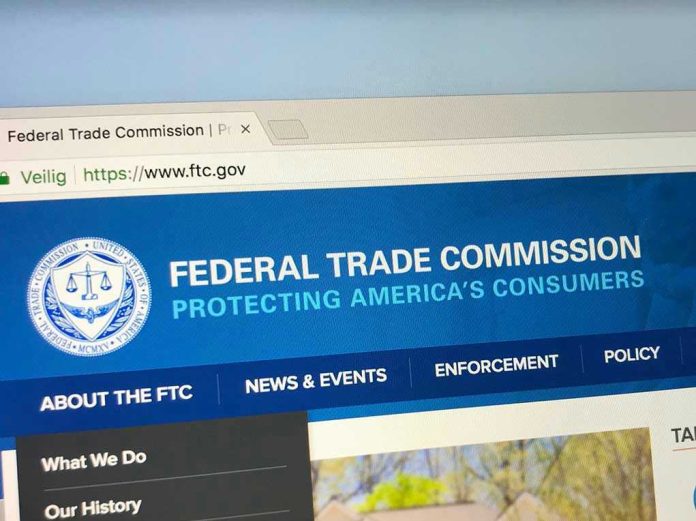
As Washington sends out $27.6 million in refunds for hidden subscription traps, many conservatives are asking whether this long‑overdue crackdown will finally rein in digital junk fees without morphing into another excuse for federal overreach.
Story Snapshot
- The FTC is sending more than $27.6 million back to consumers hit with unauthorized recurring charges through negative-option subscription schemes.
- Companies enrolled people in “free trials” or one-time purchases that quietly flipped into ongoing charges that were hard to cancel.
- These refunds draw on multiple enforcement actions using the FTC Act and ROSCA, reflecting a years-long campaign against dark-pattern billing.
- Conservatives back accountability for fraud while warning that aggressive rulemaking must not become a back door for bigger, more intrusive government.
How Unauthorized Billing Schemes Drained Family Budgets
Across the country, ordinary Americans signed up for what they believed was a simple, one-time deal or short free trial and discovered months later that money kept disappearing from their accounts. Negative-option billing turned silence into consent, allowing companies to keep charging unless customers managed to navigate confusing cancellation mazes. For families already stretched by inflation and years of Washington’s reckless spending, these surprise debits felt like one more elite-designed scheme to siphon off household savings.
The FTC’s announcement that it is sending more than $27.6 million in redress is built on a series of enforcement actions that predate the Trump restoration but are now being processed at scale. The agency gathered settlement funds from companies that used deceptive “free trials,” auto-enroll after sign-up, and obstructive cancellation paths. Instead of a single headline case, this refund wave aggregates multiple matters where courts approved orders requiring both monetary relief and changes to billing practices.
What the Law Requires – And Where Companies Crossed the Line
Federal law has long barred unfair and deceptive practices, but online subscription models pushed those boundaries in ways that blindsided many consumers. Under the Restore Online Shoppers’ Confidence Act, sellers using negative options must clearly disclose key terms, obtain express informed consent before charging, and provide a simple way to stop recurring payments. Enforcement files describe the opposite: buried fine print, pre-checked boxes, and cancellation “gauntlets” that made it easier to keep paying than to break free.
Recent cases show how these tactics became a business model, not a mistake. A fintech cash-advance app had to pay $17 million after pushing users from limited offers into paid subscriptions without clear consent, then making cancellation difficult. An online dating company agreed to a $14 million resolution after customers were trapped in recurring billing cycles through hidden fees and unclear terms. Each time, the pattern was similar: deceptive marketing up front, friction and frustration when people tried to say “stop charging me” on the back end.
Why This Matters to Conservative Households and Constitutional Principles
For conservative, Trump-supporting households, these cases cut in two directions at once. On one hand, they highlight exactly what limited-government advocates expect from federal watchdogs: targeted action against fraud, property rights violations, and abusive corporate behavior that treats citizens like ATMs. Unauthorized recurring charges amount to taking someone’s money without real consent, undermining the basic right to control one’s own paycheck and financial decisions, especially for seniors and working families living on tight margins.
FTC sends more than $27.6 Million to consumers harmed by unauthorized billing schemes: https://t.co/ZD2sLkHfO0
— FTC (@FTC) December 9, 2025
On the other hand, years of left-wing activism have taught conservatives to scrutinize every new regulatory push for mission creep. The same bureaucracy that cracks down on dark-pattern billing must not be allowed to stretch its mandate into micromanaging lawful business models, punishing political opponents, or pushing ideological agendas under the banner of “consumer protection.” The key test under the renewed Trump administration is whether enforcement stays focused on clear fraud and deception, rather than becoming another vehicle for central planning or speech policing.
How Trump’s Regulatory Reset Can Channel Enforcement the Right Way
Trump’s return to office has centered on cutting wasteful bureaucracy while demanding accountability from both government and big business. Earlier terms showed that targeted deregulation, tax relief, and a booming job market can coexist with strong action against genuine bad actors, from corporate monopolists to foreign adversaries. That same approach can guide consumer protection today: keep the focus tightly on unauthorized billing, hidden junk fees, and deliberate dark patterns, while rolling back the ideological and partisan excesses built up during prior administrations.
For conservatives, the practical takeaway is twofold. First, vigilance pays: complaints, documentation of unauthorized charges, and pressure on elected officials have helped fuel these enforcement actions and refund programs. Second, constitutional guardrails still matter: Congress and the White House must ensure agencies like the FTC do not use cases like these to justify open-ended power grabs. When Washington defends property rights instead of eroding them, families keep more of what they earn and the free market works the way our founders intended.
Sources:
FTC nets settlement in robocall scheme – Fox 13
FTC orders fintech company to pay $17 million for deceptive subscription practices
FTC refunds issued in April 2025 – Who’s getting paid?
FTC updates, August 4–22, 2025 – Retail & Consumer Products Law
Federal Trade Commission – Official Site
FTC Legal Library – Cases and Proceedings
FTC Refunds – Getting Your Money Back
FTC launches AI regulation initiative – 2025 press release