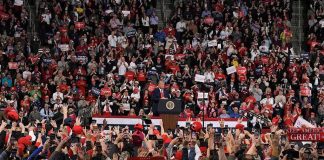

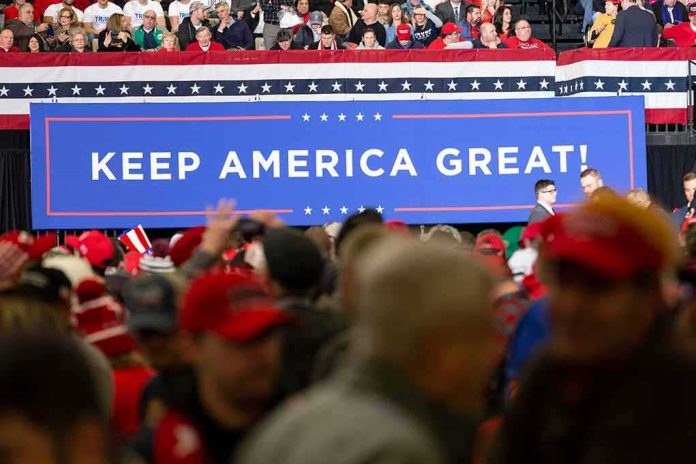
Republican candidates were told to bring at least $25,000 to attend President Trump’s midterm convention, turning a party event into a pay-to-enter fundraiser.
Story Highlights
- Republican candidates faced a suggested $25,000 minimum donation to attend the Dallas midterm convention.
- State parties offered high-dollar packages, with some tickets up to $20,000 and VIP tiers far higher.
- Former Governor Chris Sununu said conventions should raise money for candidates, not charge them.
- The model fits a yearslong trend toward donor-funded conventions and paid access.
What Sparked The Backlash
Former New Hampshire Governor Chris Sununu said he had never heard of the Republican National Committee asking candidates to pay to attend and argued the convention should raise funds for them instead. His comments followed reports that House members faced a $25,000 charge to participate in the Dallas midterm convention. Sununu’s reaction captured a wider concern that the event placed costs on candidates rather than building support for them ahead of November.
Reports from Washington and Texas outlets described the $25,000 as a minimum attendee donation for entry, with some suggesting it was a recommended floor rather than a hard fee. Either way, candidates and incumbents understood they needed to budget high sums to be in the room. That blurred the line between a working party gathering and a donor gala, and it raised questions about who gets access when access has a price tag.
How The Money Worked At The Convention
Party fundraising structures around the event went well beyond a single fee. Politico reported state parties set their own prices, with some delegate packages priced up to $20,000 and a “golden VIP member” tier in California at $250,000. The Wall Street Journal reported separate high-end offerings around the same window, including paid roundtables and pricey photo opportunities with President Trump, underscoring a broad, multi-tier cash strategy.
Texas-focused coverage showed participation packages starting at $5,000 and running to $20,000, confirming that state groups used the Dallas gathering to pull in large donations. Combined with the national minimum attendee donation reports, the convention looked like a joint exercise in fundraising at every level. That approach can bring in quick cash, but it also risks shutting out lower-resourced campaigns and volunteers who cannot afford steep entry prices.
The Bigger Trend In Party Conventions
Academic and industry research shows a shift in how parties fund conventions. After rule changes in 2014, conventions leaned far more on private donors, host committees, and high-dollar packages. Scholars documented that access-oriented donor roles changed as outside committees grew, but the core pattern remained: large checks keep the lights on. By 2020, private money covered most convention costs, normalizing paid tiers and exclusive rooms at major party events.
LOL
"The Republican National Committee is staging a two-day midterm convention in Dallas next month — once nicknamed “Trumpapalooza” — with Trump headlining the second night.
The idea is to drag MAGA voters to the polls in an election where Trump isn’t on the ballot.…
— Lorraine E-Van-Off (@LorraineEvanoff) August 27, 2026
That trend helps explain the Dallas model, but it does not erase the concern. Many voters across the spectrum already believe powerful insiders run politics. When a candidate’s seat at a convention requires $25,000 or more, the event can look less like a forum to rally a broad base and more like a club for those who can pay. That perception feeds the belief that insiders are rewarded while grassroots voices wait in the hallway.
What It Means For 2026 Campaigns
Campaigns with strong donor lists can treat the convention as a networking win and a fundraising write-off. Lean campaigns may have to skip it or trade time chasing money to cover the door charge. Party committees can raise millions fast this way, but the cost is trust. Both conservatives and liberals who hate insider politics see the same signal: access is for sale. In a tight midterm map, that can depress energy where parties need it most.
What We Still Do Not Know
Reports differed on whether the $25,000 was a firm fee or a strong suggestion, and not every state party used the same pricing. Some details about who ultimately paid, who received waivers, and how funds were split between national and state committees remain unclear from public reporting. What is clear is the direction of travel: more money up front for access, and more friction for candidates and activists who cannot match donor-class budgets.
Sources:
mediaite.com, wiod.iheart.com, wsj.com, algop.org