

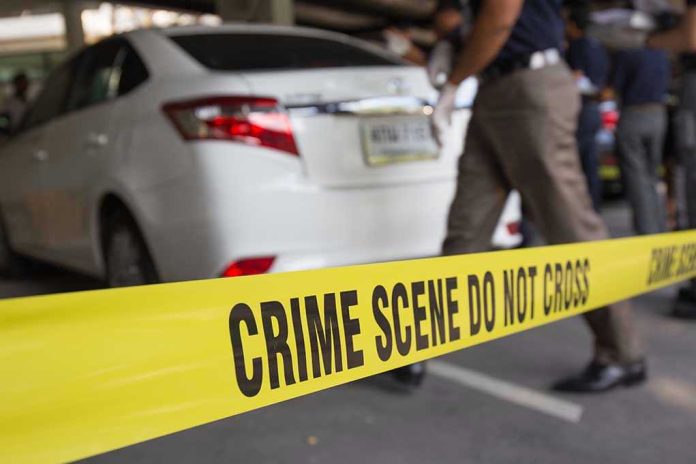
A 14-year-old Florida girl’s brutal murder is exposing how soft-on-crime culture, broken schools, and social media chaos are failing America’s kids and families.
Story Snapshot
- Police say 14-year-old Danika Troy was lured by two classmates, shot multiple times, and set on fire on a wooded path in Pace, Florida.
- Her mother first reported her as a missing “runaway,” highlighting how quickly real danger can be dismissed in today’s system.
- Both suspects, ages 14 and 16, are charged with first-degree premeditated murder and may be tried as adults.
- The case raises hard questions about school discipline, social media disputes, parental responsibility, and juvenile justice.
From ‘Runaway’ Label to Homicide Victim in Just 48 Hours
On a Sunday in early December, 14-year-old Danika Jade Troy left her home in Pace, Florida, riding a black and red electric scooter. By Monday, her mother reported her missing, and like far too many families in today’s overwhelmed system, she heard that her daughter was treated as a possible runaway rather than an immediate high-risk case. By Tuesday, a passerby on a wooded path off Kimberly Road found a burned body, shell casings, and that same scooter.
Deputies soon identified the victim as Danika by her clothing and the scooter description. What began as a missing juvenile report had become a homicide investigation involving extraordinary brutality. For parents who feel the culture has devalued life and undermined basic respect, this fast-moving timeline is a gut punch: a young girl goes from “maybe she ran away” to confirmed murder victim in roughly 48 hours, inside a community that once felt quiet and safe.
Classmates Accused of Luring, Shooting, and Burning a 14-Year-Old
Investigators say two of Danika’s own classmates at High Road School, 16-year-old Gabriel Williams and 14-year-old Kimahri (or Kamari) Blevins, planned her killing in advance. According to deputies, a witness came forward describing how the two boys talked about murdering Danika. Blevins allegedly lured her to the wooded path, where Williams is accused of shooting her multiple times with a 9 mm handgun, dousing her with gasoline, and setting her body on fire to destroy evidence.
Both boys are now charged with first-degree premeditated murder and held by the Florida Department of Juvenile Justice while prosecutors prepare the case for a grand jury. That grand jury will decide whether to charge them as adults, a decision that carries enormous implications for accountability and deterrence. For many conservatives, a crime this calculated and vicious fits exactly the kind of case where adult charges and serious sentences are not only justified but essential to protect the public.
Guns Stolen from Home, Social Media ‘Hurtful Comments,’ and a Broken Culture
Sheriff Bob Johnson says the gun used to kill Danika was stolen from Williams’s mother, underlining a familiar problem: firearms in the home that are not securely stored away from minors. At the same time, early interviews suggest the supposed motive was painfully trivial compared with the life that was taken. Williams allegedly told investigators he was upset over “hurtful comments” Danika made about him, while Blevins described a social media falling out before Thanksgiving and said he had blocked her online.
That combination—easy access to a firearm, simmering resentment, and constant digital drama—has become disturbingly common in youth violence cases. But access and anger do not excuse premeditated murder. Conservatives concerned about family breakdown and moral confusion see a deeper crisis: teens steeped in social media, detached from faith, discipline, and respect for life, making irreversible decisions with no apparent understanding of right and wrong. The answer, they argue, is not more feel-good programs, but firm consequences and a return to strong parental responsibility and school standards.
Schools, Community Shock, and the Fight Over Juvenile Justice
All three teens attended High Road School, part of Santa Rosa County District Schools, tying this crime directly to a school community already under pressure from behavioral challenges. The district issued a standard statement of devastation, cooperation with law enforcement, and counseling services for students and staff. Neighbors near Kimberly Road describe being shocked and terrified that such violence erupted along a path they once treated as safe. The sense that “this doesn’t happen here” is fading fast in many American towns.
Now the focus turns to the justice system. Prosecutors plan to present the case to a grand jury to determine whether Williams and Blevins will be tried as adults, a step typically reserved for the most severe crimes. Advocates of a tougher approach argue that when teens plan a killing, lure a victim, fire multiple shots, and burn the body, they have crossed every moral and legal line. For them, lenient juvenile treatment would send exactly the wrong message at a time when violent crime and disregard for life already haunt too many communities.
Beyond the courtroom, this case will likely fuel debates over safe gun storage, the role of parents when a weapon is stolen, and how schools handle online conflicts that could turn deadly. While Sheriff Johnson has said parents are not currently facing charges over the stolen gun, many on the right emphasize that responsible gun ownership includes keeping firearms out of the hands of minors without demonizing law-abiding gun owners. The true failure here is not the Second Amendment; it is the collapse of basic moral guardrails and meaningful consequences.
Sources:
2 Florida teens charged with murder after shooting girl, setting her body on fire: police