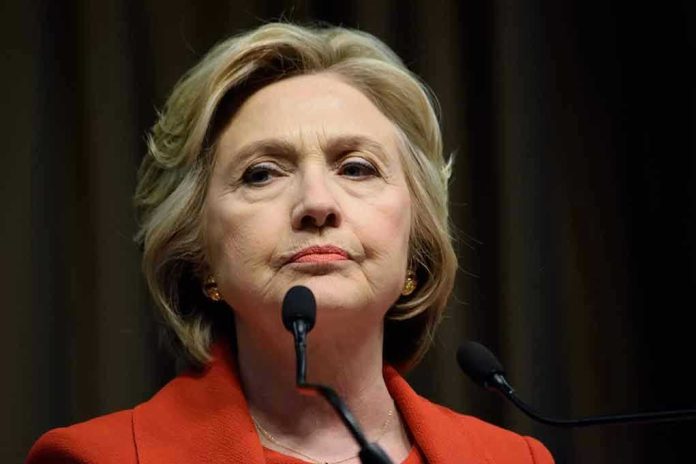
Hillary Clinton is back in the press accusing “MAGA” of a “war on empathy”—and Jonathan Turley’s viral response highlights why many conservatives see the lecture as political theater, not self-reflection.
Quick Take
- Hillary Clinton’s new Atlantic op-ed argues the Trump movement is undermining empathy and pushing the country toward “theocracy.”
- Constitutional law professor Jonathan Turley fired back on X, calling the piece a striking example of “lack of self-awareness,” citing Clinton’s past public record.
- The clash shows how “empathy” rhetoric is being used as a cultural weapon in 2026—often aimed at religious conservatives and Trump voters.
- Available reporting shows the dispute is mostly an online media event so far, with no documented response from Clinton to Turley’s thread.
Clinton’s ‘War on Empathy’ Claim Lands in a Post-2024 Political Reality
Hillary Clinton’s January 30, 2026, essay in The Atlantic, titled “MAGA’s War on Empathy,” portrays Trump-aligned politics as hostile to empathy and linked to “Christian nationalism,” with warnings about democracy sliding toward theocracy. The timing matters: Trump is back in office, and Democrats are trying to reframe policy fights as moral emergencies. The available material indicates Clinton’s argument is aimed at energizing opposition as much as persuading skeptics.
Jonathan Turley Self-Awareness Nukes Hillary Clinton After Her Lecture About 'MAGA's War on Empathy' https://t.co/njwtReb9aQ
— Twitchy Updates (@Twitchy_Updates) January 31, 2026
Conservatives who lived through years of media sneering at “deplorables,” endless lectures about “our democracy,” and culture-war pressure on faith and family hear the same familiar message in new packaging. The article’s framing also leans into a long-running narrative that treats traditional religious convictions as inherently suspicious in public life. That dynamic is central to why the reaction wasn’t just disagreement, but open ridicule across right-leaning commentary.
Turley’s X Thread Focuses on Clinton’s Public Record, Not Abstract Motives
Jonathan Turley, a George Washington University law professor with a public profile in constitutional disputes and congressional testimony, responded on X the same day Clinton’s piece ran. Turley’s criticism, as described in the reporting, targeted Clinton’s “lack of self-awareness” and pointed to specific moments that conservatives remember vividly: her “basket of deplorables” label for Trump voters and her Benghazi-era remarks, including the widely quoted “What difference at this point does it make?” line.
Turley’s thread also referenced Clinton’s past language about sexual-assault accusers—commonly cited by critics as part of a broader pattern of political double standards. Based on the available sources, the core of his argument is consistency: political leaders who previously mocked, dismissed, or stereotyped large groups of Americans have limited credibility when they position themselves as guardians of empathy. That critique resonates because it is grounded in statements Clinton made or is recorded as making.
Why ‘Empathy’ Rhetoric Often Turns Into a Demand for Conformity
The dispute is bigger than two public figures trading barbs. When national politics is framed as “empathy versus cruelty,” the label quickly becomes a tool for delegitimizing policy disagreement—especially on issues like immigration enforcement, gender ideology in schools, and the role of faith in public life. In practice, the word “empathy” can function like a loyalty test: agree with progressive solutions or be branded immoral, extreme, or dangerous.
That matters for constitutional culture because moral condemnation is frequently used to justify institutional pressure—on speech, religious liberty, and dissenting viewpoints. Even when no policy proposal is attached to a given op-ed, the narrative can pave the way for censorship arguments, professional penalties, or “anti-extremism” initiatives that treat mainstream conservative beliefs as threats. The research available here does not document a new legal action tied to Clinton’s essay, but it shows the rhetorical blueprint conservatives have seen before.
What We Can Verify Now—and What Remains an Online Media Event
Based on the sources provided, the story’s verified spine is straightforward: Clinton published the op-ed; Turley posted a critical thread on X; and a right-leaning outlet amplified it the next day. The reporting also indicates the reaction has largely stayed in social media and partisan commentary circles, at least as of January 31, 2026. There is no documented formal response from Clinton in the available materials, and no indication the exchange has moved into litigation or official proceedings.
Jonathan Turley Self-Awareness Nukes Hillary Clinton After Her Lecture About 'MAGA's War on Empathy' – Twitchy https://t.co/DUnmoBB1mO
— Joe Kennedy, AKA on Truth @ JosepKennedy (@Freedom4USNow) January 31, 2026
That limitation cuts both ways. Conservatives shouldn’t overstate the episode as a decisive turning point; it’s not. But it is a clean snapshot of where the political language is headed in 2026: Democrats continuing to describe Trump’s coalition in moral and quasi-religious terms, and constitutional-minded critics pushing back by pointing to hypocrisy and historical record. For voters tired of lectures, Turley’s response landed because it demanded accountability, not virtue signaling.
Sources:
Jonathan Turley Self-Awareness Nukes Hillary Clinton After Her Lecture About ‘MAGA’s War on Empathy’
Congress.gov event text (118th Congress, House event 115294)