

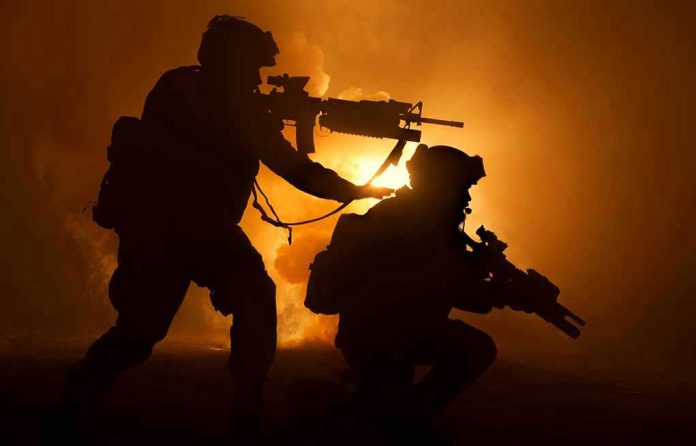
The Pentagon’s recent review threatens to reverse a decade of progress for women in combat roles, raising alarms about gender equity in the military.
Story Overview
- The Pentagon initiates a review of women in ground combat roles, sparking debate.
- Defense Secretary Pete Hegseth aims to establish equal standards for combat roles.
- Advocates argue the policy change could harm women’s military participation.
- Critics fear the rollback of diversity programs could hurt recruitment and readiness.
Pentagon’s Review Sparks Controversy
In January 2025, with the Trump administration’s return, Defense Secretary Pete Hegseth initiated a comprehensive review of the effectiveness of women in ground combat positions. This move marks a significant shift following a decade of women’s integration into combat roles, a policy that began in 2015. The review has sparked considerable debate about whether it undermines hard-won gender equity in the military.
The review comes amidst broader changes within the Pentagon, including the dismissal of the Defense Advisory Committee on Women in the Services (DACOWITS). Established 74 years ago, DACOWITS played a pivotal role in integrating women into the military. The dismissal, along with the elimination of diversity programs, has raised concerns among advocates about the potential rollback of progress.
Policy Changes and Implications
The Army recently announced new fitness standards requiring both men and women in combat specialties to meet the same minimum scores, with adjustments for age. However, this standard exempts certain specialties with fewer women, like artillery crewmen, and applies more stringently to positions with higher female representation, such as artillery officers. This has led to criticisms about fairness and potential impacts on women’s military careers.
Critics argue that these policy changes could discourage female recruits and damage morale, ultimately affecting unit readiness. With women comprising nearly 20% of the total military, any deterrent to recruitment could have long-term implications for military effectiveness. The policy changes, perceived as targeting women’s service, could influence broader discussions on diversity and inclusion.
Reactions from Stakeholders
Women veterans and advocates have expressed strong opposition to these policies. Sue Fulton, founder of the Women in the Services Coalition Initiative, argues that inclusion strengthens the military. Olivia McQuail, an Army veteran and Ranger School graduate, criticizes the policy reversal, emphasizing that women have earned their place in combat roles through performance.
The Pentagon’s narrative of focusing on military readiness is challenged by advocates who believe that excluding capable personnel undermines overall effectiveness. As the debate continues, the broader implications for military capability and recruitment remain a point of contention.
Sources:
Congressional Representative’s Office: Policy Timeline and Quotes
Congressional Representative’s Office: Advocacy Events and Perspectives
NPR News: Pentagon Study Launch
WSHU: Review of Effectiveness of Women in Combat