

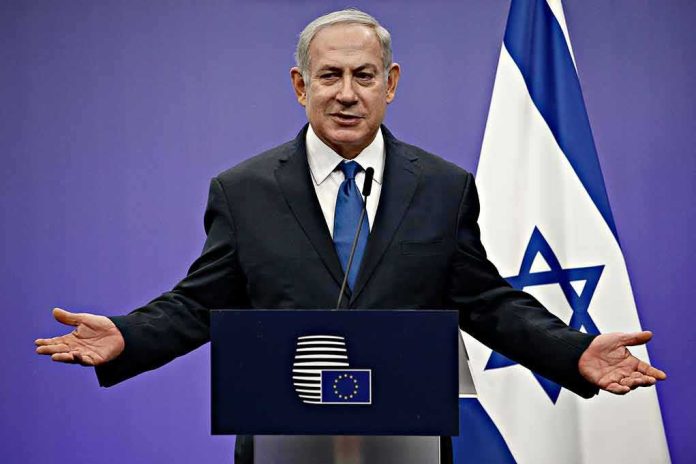
Israelis turned out in numbers not seen in decades Tuesday to vote in an election widely described as a judgment on Prime Minister Benjamin Netanyahu’s 17-year grip on power.
Story Snapshot
- Israel held its first national election since the Hamas-led attack on October 7, 2023.
- Turnout hit nearly 56% by 4 p.m., the highest at that point in decades.
- Former military chief Gadi Eisenkot emerged as Netanyahu’s main rival.
- Israel’s voting system means the result won’t be decided by raw votes alone, but by coalition deals after the count.
Highest Turnout In Decades Signals High Stakes
Polls across Israel opened to long lines Tuesday as voters cast ballots in a race the Associated Press called a referendum on Netanyahu’s nearly unbroken 17-year rule. By 4 p.m., almost 56% of eligible voters had already shown up, the strongest turnout at that hour since at least 1973. By noon, more than 31% had voted, the busiest midday showing since 1977.
This was no ordinary election. It marked the first time Israelis went to the polls since Hamas militants attacked the country on October 7, 2023, setting off years of war in Gaza, Lebanon and against Iran. Voters carried grief, anger and deep division over Netanyahu’s handling of that crisis into the voting booth.
Netanyahu Faces His Toughest Challenger Yet
Gadi Eisenkot, a former Israeli military chief now leading the Yashar party, stood as Netanyahu’s clearest rival. News outlets described the race between the two men as tight, with polling suggesting no easy win for either side. Eisenkot’s military background gave him credibility on security, the exact issue voters were weighing most as they judged Netanyahu’s wartime leadership.
The vote wasn’t only about one man’s record. Coverage also framed it as a choice over the character of the state itself, pitting religious-nationalist forces against liberal-secular ones. That means the same ballot box carried judgments on Netanyahu, on the war, and on what kind of country Israel should become going forward.
Why Counting Votes Won’t Settle It
Israel’s election system complicates any simple reading of the results. Voters choose parties, not a prime minister directly, and the Knesset’s 120 seats require a coalition of at least 61 to govern. No single party has ever won that outright in Israel’s history, meaning horse-trading after election day often decides who actually leads the country.
That system means a party or leader could fall short of a vote majority and still end up in power, if coalition talks break the right way. Analysts have long noted that proportional representation disperses authority among many parties, even though the prime minister remains the public face most voters hold responsible. The 2026 vote fits that pattern exactly.
A Leader Shadowed By Legal Trouble
Netanyahu entered this election already fighting a separate battle in court, where he faces corruption charges that have trailed him for years. Those proceedings added another layer to a vote already weighted down by war, economic strain and questions about accountability for the October 7 failures. For many voters, Netanyahu’s political survival and his legal fate felt tied together.
Israel’s electoral threshold, set at 3.25%, means any party falling short wins nothing and its voters’ choices are effectively discarded. That rule shapes which smaller parties survive and which disappear, influencing the coalition math that will ultimately decide whether Netanyahu stays in office or hands power to a rival alliance.
What Comes Next
Once final results are certified, Israel’s president will consult party leaders and task someone, likely Netanyahu or a rival bloc leader, with trying to build a governing coalition. That process can take weeks. Whatever the vote totals show, the real verdict on Netanyahu’s future will come only after those closed-door coalition talks conclude.
Sources:
youtube.com, inquirer.com, the-journal.com, pbs.org, ksat.com