

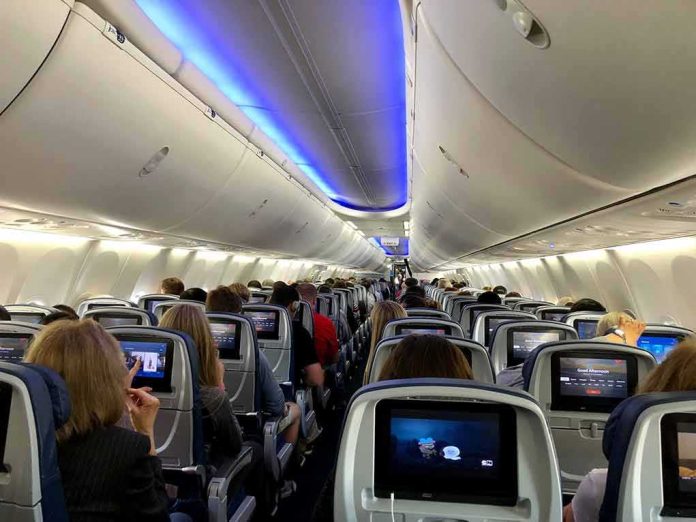
A tourist accused of throwing a rock at a protected Hawaiian monk seal now wants Delta’s flight records to argue he was never warned—and the court will have to weigh if that matters.
Story Snapshot
- Defense seeks Delta’s April 28 Seattle-to-Maui in-flight and passenger notices to argue mitigation.
- Prosecutors say a bystander video shows a deliberate throw at the seal’s head and have charged the tourist under federal law.
- Government says it has no evidence Delta aired a Hawaiian Airlines-style wildlife video and that airlines are not required to do so.
- Hawaii and federal agencies already warn the public to avoid and not disturb monk seals under strict laws.
What The New Filing Asks For And Why It Matters
Defense attorneys for Igor Mykhaylovych Lytvynchuk filed a request for Delta Air Lines records from his April 28 flight to Maui. They want in-flight videos, app notices, and any wildlife advisories that passengers received. They argue these records could show what he saw, and shape a court’s view of his state of mind or his sentence. The government’s quoted response said it has no information that Delta aired a Hawaiian Airlines-style “Travel Pono” wildlife video on that route.
The defense points to a known comparator. Hawaiian Airlines launched a five-minute “Travel Pono” program in 2021. That video covers ocean safety, wildlife protection, and responsible tourism for Hawaii-bound travelers. The filing cites this to show such warnings exist and could reach passengers before they land. But a Hawaiian Airlines video does not prove Delta’s practices. The court will decide whether missing airline warnings, if any, can reduce blame or punishment in this case.
What Prosecutors Say The Video Shows And The Laws At Stake
Prosecutors charged Lytvynchuk with “taking” an endangered Hawaiian monk seal by throwing a large rock at its head. They say a witness recorded video that shows him track the animal’s movement and then take aim before the throw. The United States Attorney’s Office in Hawaii described the act as harassment under the Endangered Species Act and the Marine Mammal Protection Act, which carry serious penalties for harming protected marine life.
The government argues the case rests on the conduct itself, not on airline education. Their position highlights a core point of wildlife law: you do not need a special notice to be held responsible for harassing a protected animal. Official guidance from Hawaii and federal agencies already tells the public not to touch, chase, or disturb monk seals and to keep a safe distance. Those rules apply to residents and visitors alike, at all times.
How Public Guidance And “Notice” Collide In Court
Hawaii’s Division of Boating and Ocean Recreation and the National Oceanic and Atmospheric Administration publish clear rules for sharing the shore. They explain monk seals are protected under state and federal law and warn that getting too close or disturbing them can be illegal. These materials help the public know the law. But the legal fight here focuses on whether airline-specific warnings—or the lack of them—change how a court views intent or sentencing in one person’s case.
Hawaii monk seal attack suspect could walk free as court filings reveal outrageous new excuse https://t.co/enAdZun9Fp pic.twitter.com/KvgwzzZEfp
— New York Post (@nypost) October 14, 2026
The defense move feeds a wider worry many Americans share. People see big systems shift blame and dodge duty, while regular citizens face the fallout. Critics on the right and left say agencies, airlines, and tourism groups often talk about “education,” yet gaps remain when it counts. Supporters of tough enforcement say the rules are public, simple, and common sense: do not harass wildlife. The court now must sort facts from feelings and decide how much “notice” matters under the law.
What To Watch Next In The Case Timeline
First, the court will decide how far to let the defense probe Delta’s records for that April 28 flight. Second, if the records show no wildlife video or notice, the judge will weigh whether that affects intent or only sentencing. Third, prosecutors will keep centering the alleged act and the witness video they say shows a deliberate throw. Any hearing or ruling that clarifies how “notice” fits under these federal laws will shape similar cases going forward.
Why This Case Taps A Broader Trust Problem
This dispute lands in a moment when many Americans believe institutions protect themselves first. Some see a tourist blaming an airline for a violent act against a rare animal and call it absurd. Others see a system that sells paradise but fails to warn plainly in the right channels, then throws the book at one person. Durable solutions need both: clear rules that are enforced, and real-world education that meets travelers where they are—before feet touch the sand.
Sources:
nypost.com, newsweek.com, fisheries.noaa.gov