

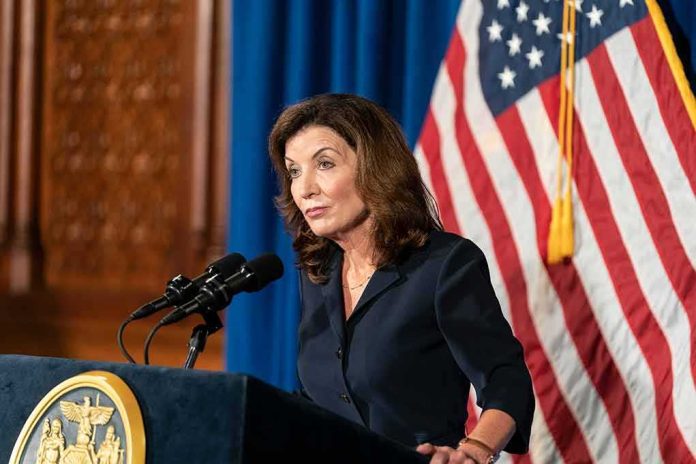
New York’s governor stripped a local prosecutor of a high-profile case and handed it to the state attorney general, concentrating power to force a fresh look at alleged campus sexual assault.
Story Highlights
- Governor Kathy Hochul appointed Attorney General Letitia James as special prosecutor in the Cornell case.
- The executive order moves the probe from the Tompkins County district attorney and grants grand jury authority.
- Officials cited lost confidence in the local handling amid new records and public scrutiny.
- The transfer aims to ensure independence but raises long-running questions about state supersession power.
Governor Transfers the Case and Centralizes Authority
Governor Kathy Hochul signed an executive order appointing New York Attorney General Letitia James as special prosecutor in the investigation of an alleged 2024 gang rape near Cornell University’s campus. The order directs the attorney general to investigate, present evidence to a grand jury, and prosecute if warranted. The move displaces the Tompkins County district attorney from the matter. The governor’s office framed the transfer as necessary to restore confidence and pursue all leads in a complex case.
Attorney General Letitia James said her office will follow the facts and fully use the powers granted by the order. As special prosecutor, James can issue subpoenas, convene a grand jury, and bring charges if the evidence supports them. Reporters noted that the order gives her office full prosecutorial powers normally held by the local district attorney. The shift is meant to create distance from past decisions and to put one team in charge of evidence, witnesses, and next steps.
Why the State Stepped In Now
The governor cited new records and growing concerns about how the case was handled by university police and local prosecutors as reasons for the change. National outlets reported that Hochul said she lost faith in the local team’s ability to oversee the matter impartially. The announcement followed renewed public attention and pressure around the case. The state’s action signals urgency to review earlier choices and to apply a single standard across agencies involved.
The executive order rests on New York Executive Law Section 63, which allows the governor to direct the attorney general to take over a prosecution. Legal scholars describe this as a broad “superseder” power that centralizes control in Albany when confidence in local handling breaks down. Past New York cases have used similar appointments in sensitive matters, including those with intense public interest and complex records.
What Changes for the Investigation
The special prosecutor model puts charging decisions, witness strategy, and possible grand jury action under one office. That can speed document review and reduce turf battles between agencies. It also gives the attorney general a clearer line to ask a grand jury to weigh evidence and potential charges. For the woman who reported the assault, this structure may offer a single point of contact and a defined process, though outcomes will still depend on the strength of the evidence.
New York Governor Kathy Hochul appointed Attorney General Letitia James as special prosecutor in the Cornell assault case.
The original investigation relied on a six-page summary that omitted the victim’s clear statement that she had been raped.
James will independently review…
— Hải Ly (@leslieMen) October 3, 2026
The shift also brings trade-offs. A state takeover can boost trust for some, who see independence from local ties. Others worry that such moves can look political, given the governor’s role in picking the prosecutor. Research on New York’s system notes that while it can fix conflicts, it also raises questions about accountability and optics in high-profile cases. Those debates will likely continue even as investigators work the file.
Why This Matters Beyond Cornell
townhall.com, abcnews.com, nbcnews.com, ag.ny.gov, nytimes.com, governor.ny.gov, washingtontimes.com