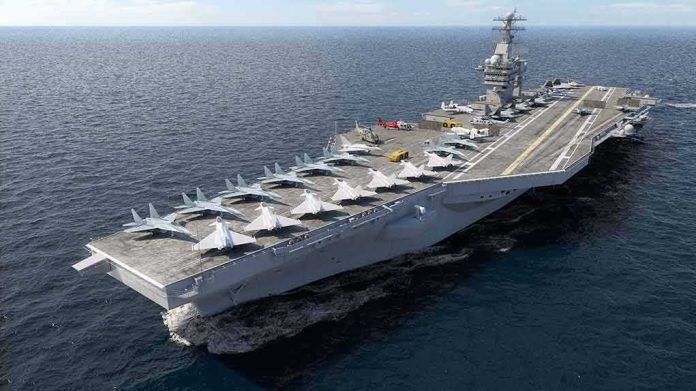
A third U.S. aircraft carrier and thousands of troops are moving toward the Middle East, signaling a major escalation in American force posture.
Story Snapshot
- The Pentagon is sending a third carrier and more troops to the region to bolster deterrence.
- Carrier groups rely on escorts for air and submarine defense, a core feature of naval doctrine.
- Modern missile threats are pushing changes in how carriers defend and operate.
- Debate over dispersing airpower echoes historic use of smaller “escort carriers” for support roles.
What Is Moving: A Third Carrier and Added Troops
Defense leaders ordered a third U.S. aircraft carrier and several thousand troops to the Middle East to strengthen deterrence and protect U.S. forces. Carrier strike groups bring air power, surveillance, and logistics. They also carry layered defenses and sail with destroyers and cruisers that screen against submarines and aircraft. Naval doctrine describes carriers working “in concert with escort warships” to provide air and undersea defense, a baseline the Navy has used for decades.
Commanders use a carrier surge when tensions rise or when allies need visible backing. The move increases options for air patrols, missile defense, and rapid strikes if needed. At the same time, it adds demand on crews and budgets that are already stretched. Support ships, munitions, and spare parts must keep pace. These realities shape how long any surge can last and how often ships must rotate home for maintenance and rest.
Why Carriers Still Matter Under Missile Threat
Planners face new dangers from long-range anti-ship missiles and dense surveillance. Recent analysis describes how the Navy is “hardening” carrier defense with better sensors, longer-range drones for refueling, and more layers to stop incoming weapons. These steps aim to keep carriers outside the most dangerous zones while keeping aircraft on station longer. The goal is simple: protect the ship, keep the flight deck running, and hold targets at risk when crises flare.
These changes fit a wider shift called distributed maritime operations, where forces spread out to complicate enemy targeting. Under this approach, escorts take on bigger roles in screening, and aircraft share data to extend the fleet’s eyes and reach. The more a carrier can push its air wing’s range and use its escorts well, the less it must sail near shore-based missiles. That balance is central when more U.S. carriers pack into a tight region under stress.
The Escort-Carrier Echo: Lessons, Not Templates
History offers clues. During World War II, small “escort carriers” handled convoy protection, close air support for landings, and aircraft ferry runs across the Pacific. The Navy even organized an Escort Carrier Force as a wartime command, which showed the concept had real operational weight, not just theory. Those ships freed larger decks to focus on fleet battles while keeping air cover on supply lines and beaches where troops fought.
Today’s Navy is not bringing back World War II escort carriers, and no current policy calls for that. But the pattern returns in debate. Some analysts argue carriers may need novel roles, including deception, under heavy surveillance and missile pressure. Others stress carriers and escorts must combine to defend the fleet and project power at range. With a third carrier now heading to a tense theater, those lessons matter for how leaders deploy, sustain, and protect American forces.
Sources:
en.wikipedia.org, defensemedianetwork.com, studyguides.com, realcleardefense.com, scribd.com, history.navy.mil