

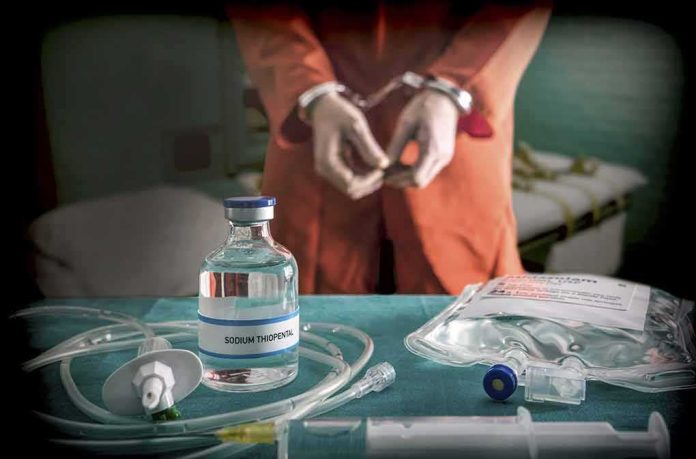
Witnesses say Tennessee twice injected lethal drugs into Christa Pike, yet she remained alive and breathing for more than 40 minutes.
Story Snapshot
- Witnesses and court filings say two pentobarbital doses failed to end Pike’s life.
- A federal appeals court and the Supreme Court issued rapid, conflicting orders before the attempt.
- Reporters were escorted out while Pike was still breathing, prompting emergency legal action.
- The case renews scrutiny of lethal injection and state execution protocols nationwide.
What Happened In The Execution Chamber
On Wednesday night in Nashville, Tennessee officials attempted to execute Christa Pike by lethal injection. Media witnesses and an emergency filing by Pike’s attorneys say staff administered two syringes of pentobarbital. They reported Pike remained alive, snoring, and breathing more than 40 minutes after the second dose. Reporters were told to leave while she was still breathing. Attorneys called the scene unnecessary agony and asked courts to stop the process.
The Tennessee Department of Correction had prepared for the execution after courts lifted a morning pause. The agency had earlier invited news organizations to serve as required witnesses for the 10 a.m. start time. The timeline stretched into the evening amid legal moves and the state’s stated plan to proceed before a midnight deadline. The governor had denied clemency earlier in the week, saying he would uphold the sentence.
The Fast-Shifting Legal Backdrop
Hours before the attempt, the United States Court of Appeals for the Sixth Circuit issued a short reprieve to review issues tied to Pike’s background and sentencing. The United States Supreme Court then cleared the way, letting the execution move forward the same day. After the drugs were given, lawyers filed an emergency motion that described Pike as conscious and alive. Media outlets reported she was later taken for medical care after the attempt was halted.
These rapid orders fit a pattern seen in death penalty cases. Last-minute filings, narrow rulings, and shifting timelines are common near scheduled executions. Courts often weigh claims about past trauma, mental health, or procedure errors. Here, the legal whiplash ran straight into the realities of the protocol in the room. That collision left the public with eyewitness accounts, sparse official detail, and a prisoner still alive after two drug rounds.
Protocol Questions And Public Accountability
Witness accounts point to a core question: did the state follow its own lethal injection protocol? Reports describe two pentobarbital syringes, closed blinds during medical checks, and prolonged breathing. Tennessee’s written protocol calls for a second set only if the inmate is not deceased after the first set, the waiting period, and a physician exam. Reporters say they were removed while Pike was still breathing, which raised doubts about oversight in real time.
Not a minor procedural failure; it goes to the competence and safeguards of the execution process itself.
US death row inmate Christa Pike taken to hospital after surviving two lethal injections, says lawyer https://t.co/uv8Xru7spR
— Harry Wolstenholme (@HarryWolst) October 1, 2026
National data show lethal injection has produced the most visible failures among execution methods. Researchers have counted dozens of botched executions or attempts, many linked to problems with drug delivery, access to veins, or protocol lapses. Public scrutiny grows when witnesses see signs of distress while the state releases little medical detail. The Pike attempt now joins those high-profile cases, with both sides citing process and basic competence as central concerns.
Why This Matters Beyond One Case
For many Americans, this episode cuts to trust in government competence. People on the right and left already worry that agencies hide errors and protect insiders. A state failing at the most serious act it can take—ending a life—intensifies that view. Supporters of capital punishment expect a prompt, lawful process. Opponents see fresh evidence of avoidable suffering. Both camps can agree the process must be clear, consistent, and humane if the state claims such power.
Sources:
redstate.com, cbsnews.com, usatoday.com, nbcnews.com, edition.cnn.com, cnn.com, axios.com, cbc.ca, tennessean.com, wsmv.com, abc7.com