
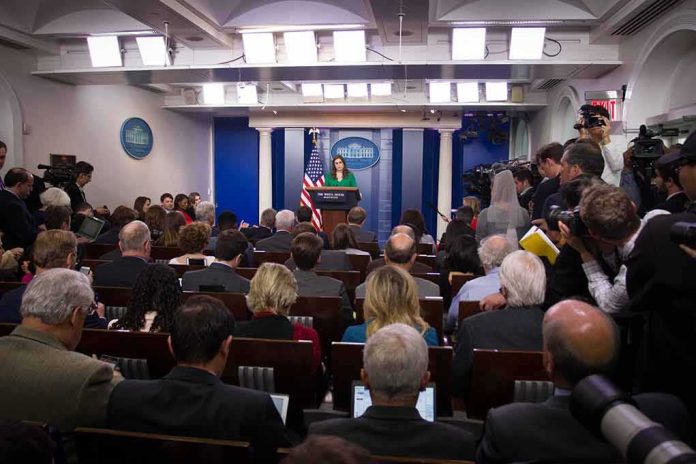
President Trump said he is banning CNN, MS NOW, and Politico from the White House “effective immediately,” tying the move to what he calls “fake news.”
Story Snapshot
- Trump announced an immediate White House ban on CNN, MS NOW, and Politico, citing “fake news.”
- He said reporters should not be allowed to write “fake” or “purposely negative” stories.
- Press-freedom groups and outlets said the ban conflicts with First Amendment protections.
- Reports questioned whether formal steps to enforce the ban had been completed.
What Trump Announced and Why It Matters
President Trump posted that CNN, MS NOW, and Politico are barred from the White House “effective immediately,” accusing them of spreading “fake news” and warning others could follow. He linked Politico to what he called an “illegal” eight million dollar federal subscription under President Biden. He also said reporters should not write “fake” or “purposely negative” stories. Multiple outlets reported the announcement on September 18–19, confirming the ban’s targets and timing.
Trump’s framing echoes prior clashes with the press. Past fights included the Jim Acosta press pass case and disputes over pool access. Those cases shaped how courts weigh press access when the government opens certain spaces to some outlets but not others. The current announcement fits that long pattern, where coverage disagreements turn into access fights that raise constitutional questions about viewpoint-based decisions by the government.
How Press and Legal Groups Responded
CNN said the move is an “illegal assault” on the press and vowed to keep reporting. Politico said it would continue fair coverage and defend its First Amendment rights. The White House Correspondents’ Association said the ban threatens press freedom and stressed that access cannot depend on whether the president likes an outlet’s stories or questions. Press-freedom advocates called banning outlets over their coverage a clear First Amendment problem likely to face court challenges.
Free speech experts told reporters the action conflicts with the United States Constitution’s First Amendment protections and would likely trigger lawsuits. During Trump’s first term, a federal judge ordered the White House to restore a CNN reporter’s pass, underscoring due process and viewpoint-neutral rules. Recent litigation over Associated Press access also highlighted that, once the White House opens spaces to some journalists, it cannot exclude others because of viewpoint. Together, these responses set up another legal test.
What We Know About Enforcement and Scope
Coverage said the ban was announced as immediate. But some reports noted there was no clear sign, at that time, that formal steps had been taken to enforce it. Reports also said some journalists from targeted outlets were still seen on White House grounds after the announcement. Without a written directive, credential memo, or posted rule, it remains unclear whether the change affects hard passes, briefing access, or only certain events and locations.
#BREAKING : TRUMP BANS CNN FROM WHITE HOUSE “THROWN OUT”
President Donald Trump has announced an immediate ban on CNN, MS NOW and Politico from the White House, accusing the outlets of spreading what he called “fake news.”
Trump also warned that more media organizations could… pic.twitter.com/zoHZh8wXue— Aware International (@aware_official1) September 19, 2026
The lack of a visible directive leaves open basic questions: Who loses access, for how long, and under what criteria? A clear policy matters for both sides. The administration needs a rule that can stand up in court, and the press needs to know how to comply or challenge. Until those documents appear, the practical effect remains uncertain, which fuels political anger and public doubt about how the government picks winners and losers in the press room.
Why This Fight Reflects a Bigger Problem
Americans across politics see a system that often serves insiders first. Many on the right distrust national outlets they view as hostile to traditional values and everyday concerns. Many on the left distrust a government they see as punishing critics and favoring the powerful. A government that can block coverage based on tone or viewpoint deepens both fears. A press corps that dismisses public concerns can do the same. This clash shows how fragile trust has become.
Courts have said the White House can set reasonable, neutral rules for limited spaces. But viewpoint-based bans are a different matter. Trump’s comments linked “fake news” to “purposely negative” stories, which blurs the line between false reporting and critical coverage. That definition, if used to pick who gets in, is likely to face strong legal headwinds. The administration, if it proceeds, will need clear, specific standards that target provable falsehoods rather than disfavored views.
What To Watch Next
Watch for a written policy, a credential action, or a Secret Service instruction that shows how the ban works. Look for lawsuits seeking quick court orders to block enforcement. Expect broader warnings to more outlets if the White House follows through on its threat to expand the list. Also track whether Congress seeks records on how targets were chosen and whether any procurement claims, such as the Politico subscription allegation, are backed by contracts or audits.
At stake is more than a press pass. It is whether the people’s house remains open to tough questions from across the spectrum. Fair rules and real transparency can cool the temperature. Retaliation and vague standards will raise it. If leaders want trust, they must accept scrutiny. If newsrooms want trust, they must own errors and show their work. The country needs both sides to do better so citizens get facts, not feuds.
Sources:
english.news.cn, kesq.com, globalnation.inquirer.net