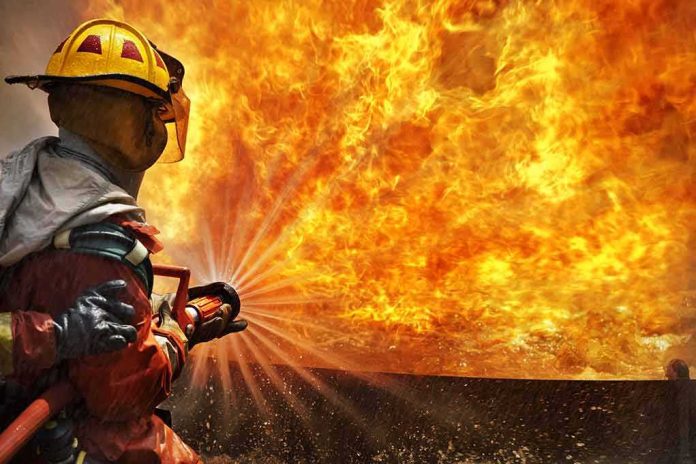
Officials say people sparked Reno’s Hawk Fire, then wind and dry brush turned it into a fast-moving threat.
Story Snapshot
- Officials list the Hawk Fire’s cause as human while the exact ignition source is still under review.
- About 90,000 residents faced evacuation alerts as flames pushed toward neighborhoods in northwest Reno.
- Governor Joe Lombardo declared a state of emergency and mobilized support as the fire exploded past 10,500 acres.
- Gusty winds, low humidity, and dry grass and brush drove the rapid spread across rough terrain.
What Authorities Confirmed About Cause and Spread
Washoe County’s emergency update lists the Hawk Fire’s cause as human and places the origin near Hawk Meadow Trail in the Somersett area. Officials have not released a more precise ignition source. They reported fuels as grass and brush, which burn fast in wind and heat. Reporters also quoted fire officials saying the blaze was started by people, with details still pending. That matches common western wildfire patterns where cause is “human” while the exact spark takes time to confirm.
Strong, gusty winds, low humidity, and very dry vegetation helped the fire race across slopes and toward homes on Reno’s northwest side. Local reporting put the fire’s growth beyond 10,500 acres within a day, with flames advancing toward populated areas and key roads. Those same conditions have driven other Nevada fires in past years, when small starts quickly became major events under wind and drought stress.
Impact on Residents and Emergency Actions
Authorities placed about 90,000 residents inside staged evacuation zones, telling many to leave at once and others to be ready. The county named the Reno-Sparks Convention Center as a shelter site, with staff and aid partners on hand. The Washoe County Sheriff’s Office issued new neighborhood evacuation alerts as the fire shifted. These steps aimed to move people out early and keep roads clear for engine crews and aircraft.
Nevada Governor Joe Lombardo declared a state of emergency in Washoe County as the situation worsened. State officials mobilized support, including help for aerial firefighting and security for evacuated neighborhoods, to back up local and federal crews on the line. Those moves free up resources and speed aid as damage assessments and fire behavior updates arrive from the field.
How A “Human-Caused” Label Fits Larger Trends
Fire managers in the West often separate cause from behavior. A person may spark a fire, but wind, heat, and dry grass decide how fast it spreads. National Interagency Fire Center statistics show human-caused wildfires make up a large share of starts in many western regions, including the Great Basin. That is why investigators first mark the broad class, then work to nail down the specific act, tool, or failure that led to ignition.
3 AM Top-of-the-Hour News
15 THOUSAND ASCRES BURNED IN A DASY…ZERO CONTAINMENT. THE HAWK WILDFIRE FORCING 45 THOUSDAND FROM THEIR HOMES IN THE RENO NEVADA AREAS. NEWS NATION REPORTER JULIETTE LEWIS IS THERE.: “800 fire personnel are on scene battling the flames. Now that is a… pic.twitter.com/wQLiCP16Ai
— Worldwide News Network (@WorldwideNNX) August 24, 2026
This distinction matters for public trust and prevention. Residents want accountability if careless actions put neighborhoods at risk. At the same time, communities also want leaders to manage fuels, harden homes, and fix slow response gaps. People across the political spectrum see a pattern: when government planning lags, families pay the price. Clear facts on cause, smarter land management, and stronger evacuation systems can reduce the chance that one bad spark becomes a citywide emergency.
Sources:
cnn.com, rgj.com, ingest.abcnews.com, emergencywashoe.com, 2news.com, thenevadaglobe.com, fresnobee.com