

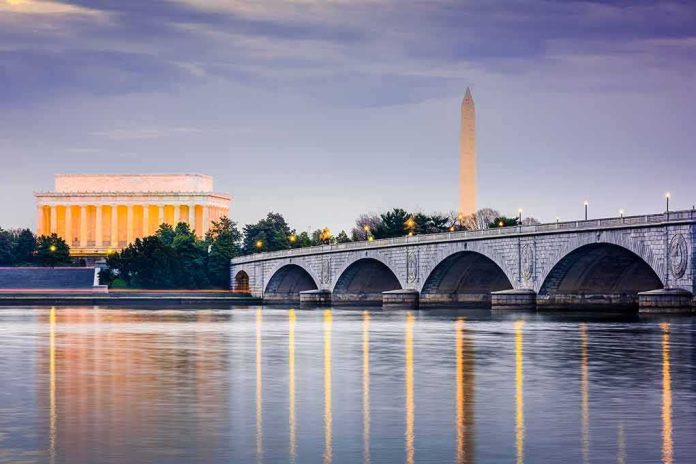
Federal prosecutors now admit the Lincoln Memorial Reflecting Pool’s pricey renovation was botched from the start, not wrecked by “vandals” — raising fresh doubts about who our government really protects.
Story Snapshot
- The Justice Department moved to drop all vandalism charges tied to Reflecting Pool damage, saying contractor errors caused the peeling.
- U.S. Attorney Jeanine Pirro’s filing cites new Interior Department records showing “rushed and flawed” installation before America 250 events.
- President Trump still blames “vandals,” even as his own Justice Department now points at the government’s contractor and project rush.
- The case highlights how federal agencies can move fast to blame citizens while hiding their own mistakes with public money.
What DOJ Now Says Really Damaged the Reflecting Pool
Justice Department prosecutors told a Washington, D.C., court they want to dismiss the felony vandalism case against former Olympian David Hearn because new records show the Reflecting Pool’s liner failed on its own. The filing says the damage “was the result of flawed installation by the contractor” during a $14 million renovation pushed to finish before the America 250 celebration. Government lawyers now argue the peeling ran across the pool, not just where Hearn walked, which does not match a targeted vandal attack.
Reports say the motion points to Interior Department documents and National Park Service records the prosecutors received only after a grand jury had already indicted Hearn. Those records allegedly describe repeated failures of the liner during installation and “extensive peeling” in many areas, showing problems before Hearn ever became a suspect. In plain terms, the government now admits the project itself was rushed and flawed, undercutting its own earlier claim that a single man violently ripped up a healthy pool surface.
How a Former Olympian Became the Fall Guy
Earlier this summer, U.S. Attorney Jeanine Pirro charged Hearn with felony destruction of property, saying he “forcefully and violently” tore up parts of the Reflecting Pool floor while training near the Lincoln Memorial. Hearn pleaded not guilty and said he left the pool “in the same condition” he found it. The case fit an easy story line: a high-profile landmark, a visible activist athlete, and a tough-on-crime Justice Department eager to show it defends national symbols from supposed “saboteurs.”
But Hearn’s lawyers pressed the government on basic evidence. They argued officials failed to preserve the key section of pool liner, then rushed ahead with repairs that made independent testing almost impossible. A judge warned that fixing the pool too quickly could jeopardize the case if it changed the alleged damage before defense experts could inspect it. As more technical documents came in, the narrative flipped. The same Justice Department that once accused Hearn now says the peeling pattern and project history make it “difficult to attribute the widespread damage to vandalism, let alone to establish that fact beyond a reasonable doubt.”
Political Blame Game and Public Frustration
Democrats quickly seized on the reversal, saying it confirmed their claim that the Trump administration has “weaponized” the Justice Department to score political points instead of calmly checking the facts. They argue that blaming a lone citizen for damage later tied to government contractors shows a rush to create a villain instead of owning mistakes in a rushed America 250 project. For many on the left, this looks like one more example of powerful insiders protecting each other while regular people carry the risk.
President Trump and some allies, on the other hand, still talk about “vandals” and “saboteurs” even after the filing that blames construction work. That stance frustrates many conservatives who already feel burned by expensive government projects, high costs, and poor results. They see a federal system that spends millions on a renovation, fails to manage the contractor, then points fingers at citizens when something breaks. Both sides can agree on this much: if the government can so quickly mislabel peeling concrete as a crime, it raises deep questions about how often agencies rush to charge first and ask hard questions later.
What This Case Shows About the System
This Reflecting Pool fight may sound technical, but it touches bigger worries shared by both conservatives and liberals. A major national landmark was renovated for millions of dollars, under a tight political timeline, and still appears to have been “botched” by poor installation. Agencies then helped build a story that blamed an individual, only to walk it back once more records surfaced. That kind of turn feeds the belief that the system protects contractors, bureaucrats, and political leaders more than average citizens walking on public ground.
JUST IN: DOJ Drops Charges Against 3 More Reflecting Pool Vandalism Defendants – Pirro Meets With Trump at White House Following Scathing Rebuke (VIDEO)
“It was not until after the return of the indictment [of Hearn], that the [Department of Interior] provided additional…
— 🇺🇸⭐️OUR-VOICES⭐️🇺🇸 (@iswho) August 4, 2026
Many Americans already feel the federal government is run by elites who rarely pay a price for failure. This case reinforces that worry. If Interior Department officials held records of liner problems weeks before Hearn was charged, people will ask why those facts did not stop the indictment in the first place. When prosecutors now say their own evidence no longer supports guilt beyond a reasonable doubt, it shows how quickly a flawed story can become a felony case — and how hard it is for regular people to trust a system that keeps making, and then quietly correcting, big mistakes.
Sources:
townhall.com, abcnews.com, politico.com, cnn.com, reuters.com, apnews.com, washingtonpost.com, thehill.com, youtube.com