
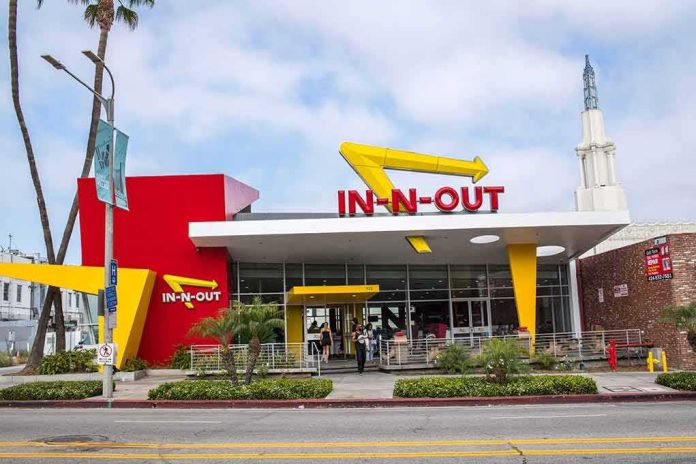
One young In-N-Out worker from Stockton became one of the faces of a Twin Falls tragedy that left families grieving and officials still sorting out the full toll.
Quick Take
- Police said an active shooter scene unfolded at or near the In-N-Out in Twin Falls and the area was closed.
- Authorities later reported three dead and two injured, while other early reports listed higher injury counts.
- The suspect was identified as 24-year-old Chad Williams, and police said he died at the scene.
- Family members said one victim, Ashley Garibay, had “fallen in love” with her job and was deeply valued at home.
A Family Loss Behind the Headlines
The shooting in Twin Falls quickly turned from a breaking news scene into a family tragedy. In the hours after the attack, In-N-Out’s chief executive said one victim was an associate working at the restaurant, and later family statements focused on Ashley Garibay, a young worker from Stockton. That shift matters because the public often hears numbers first. Families, though, are left with names, roles, and lives that ended in seconds.
Garibay’s loved ones described her as someone who truly loved her work and brought pride to the family. That kind of detail cuts through the noise around mass-shooting coverage. It reminds readers that each casualty count hides a person with routines, dreams, and people waiting for them to come home. In this case, the family’s statement gave the story its most human point: the loss was not abstract, and it was not replaceable.
What Police Said Happened
Twin Falls police publicly confirmed an active-shooter response near the In-N-Out and told the public to stay away while officers closed roads and processed the scene. City and television coverage said at least three people were killed and at least two others were hurt, while some early reports listed higher injury totals before the record settled. Police also said the suspected gunman, Chad Williams, was dead, and the threat to the public had ended.
Officials said an off-duty state trooper and a civilian fired on the attacker and pushed him away from the restaurant. That detail stands out because it shows how fast bystanders and responders were forced into a deadly event that was still unfolding in public view. Contemporaneous video and eyewitness accounts showed people running as shots rang out, which supports that the attack was real and immediate, not a rumor or a false alarm.
Why the Early Record Was So Messy
The first reports were unstable, and that is common in fast-moving mass shootings. Some outlets placed the violence inside the restaurant, while others said it was near the store or in the surrounding shopping area. Early casualty counts also changed from report to report. Police later narrowed the core facts, but the public first saw a blur of partial information, social-media clips, and live updates that did not always match each other.
Police also said they were still working to confirm the suspect’s identity and the full sequence of events. That left several open questions in the public record, including the exact manner of the suspect’s death and the motive. Those gaps do not weaken the confirmed facts, but they do show how quickly early coverage can harden into a fixed story before investigators finish their work. In tragedies like this, speed often outruns certainty.
What This Case Reveals About Public Trust
This shooting landed in a setting that people expect to be ordinary: a restaurant, a parking lot, and a busy retail area. When violence breaks out there, frustration spreads far beyond one community. People on the left and right can agree on at least one point here: families are left with pain while officials, agencies, and media outlets struggle to give clean answers. That delay fuels suspicion, confusion, and a sense that public life is always one step behind reality.
https://t.co/TEZfHrws89. County native, California woman among those killed in Idaho In-N-Out shooting An L.A. County native and a Northern California woman were among the people killed in a mass shooting at an In-N-Out Burger in Twin Falls, Idaho on Aug… https://t.co/oUgqquZ1kT
— Antelope Valley Bulletin (@AV_Bulletin) August 4, 2026
The Twin Falls case also shows how quickly social media can shape a tragedy before facts are locked down. Footage of people fleeing, claims about weapons, and guesses about the shooter raced ahead of police confirmation. Later corrections rarely travel as far as the first viral posts. For readers trying to make sense of it all, the hardest truth is simple: a real person died, others were hurt, and a grieving family is now asking the public to remember more than the headline.
Sources:
nypost.com, pbs.org, latimes.com, nytimes.com, tmz.com, wsj.com, en.wikipedia.org, cbsnews.com, nbcnews.com, youtube.com, yahoo.com, cnn.com, abc7.com, facebook.com, reuters.com, kezj.com, idahonews.com, boisestatepublicradio.org, instagram.com