House Republicans moved a $95 billion budget plan that ties war funding, farm aid, and voting rules into one high-stakes package.
Quick Take
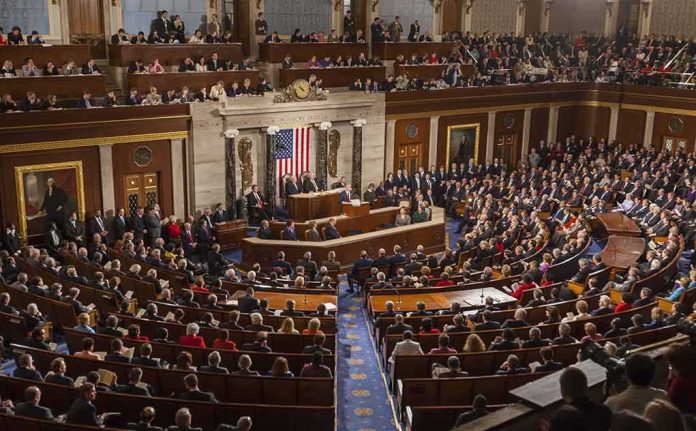
- The House adopted a Republican-only budget blueprint by a 216-214 vote.
- The plan sets aside up to $60 billion for defense and $13 billion for intelligence.
- The package also includes up to $10 billion for election-related changes tied to the SAVE America Act.
- Critics say the measure has no offsets and may face major trouble in the Senate.
What the House Actually Approved
House Republicans approved a budget resolution that would unlock a reconciliation bill with as much as $95 billion in new spending. The blueprint is not law yet, but it is the first step in a process that can move with a simple majority in the Senate. The package is built to help fund the war in Iran, replenish military stockpiles, support farmers, and push election changes backed by President Donald Trump.
The House plan directs committees to write legislation with up to $60 billion for Armed Services, $13 billion for intelligence, $12 billion for agriculture, and $10 billion for House Administration. Reporting says the defense money is meant to cover the Iran war, replace weapons used in the conflict, and keep military readiness from slipping. The White House had already asked Congress for emergency money tied to that war, which made the House move look less like a surprise and more like a fast response to a real funding request.
Why Republicans Put War and Elections Together
Republican leaders framed the plan as a way to answer two demands at once: national security and election security. Speaker Mike Johnson said the package would support troops and protect election integrity, and the blueprint includes money linked to the SAVE America Act. That law focuses on stricter voter registration rules, including proof of citizenship, which Democrats say would make voting harder. The mix reflects a familiar Washington habit: pack several hard-fought goals into one must-pass budget vehicle.
The strategy also shows how closely the war debate and domestic politics are now tied. Reporting says the package was narrowed after talks with the White House and Senate leaders, which suggests Republicans wanted a version that could survive the next step. Still, the core plan remains the same. It uses the budget process to try to move a defense request, a farm aid piece, and a voting overhaul through one track instead of three separate fights.
What Could Stop It in the Senate
The biggest obstacle is not the House vote. It is the Senate, where Republicans already face resistance inside their own party. Reports say some Senate Republicans view the plan as a long shot, and fiscal hawks dislike the lack of offsets. That matters because the resolution adds spending without identified savings. Even if the House can keep its coalition together, the upper chamber can still block or strip out pieces that do not fit Senate rules.
📰 House action overview:
The House adopted a GOP-backed budget blueprint authorizing up to $95 billion for three major priorities:
– Funding for the Iran war,
– Aid to farmers, and
– Key provisions of President Trump’s SAVE America Act, focused on voter registration and…— Washington Report (@Washington_Rep) July 22, 2026
The election part of the package may also prove weaker than the headline suggests. Coverage says the $10 billion may work more like a state incentive fund than a direct rewrite of voting law. That means the plan could encourage stricter rules without fully enacting the SAVE America Act itself. For supporters, that still counts as progress. For critics, it is proof that the bill promises more than it can deliver. Either way, the final text will matter more than the slogan.
Why This Fight Matters Beyond One Bill
This fight fits a larger pattern in Washington. Congress keeps using reconciliation to push big goals that would otherwise die in the Senate, and both parties attack that same tool when the other side uses it. Here, the clash is about more than procedure. It touches war spending, border-style election fears, deficit anxiety, and distrust of federal leaders. That is why the bill is drawing heat from both the right and the left, even if they disagree on the reason.
The deeper issue is whether lawmakers are solving urgent problems or just packaging them for political gain. The war in Iran is driving real pressure for money, and the Pentagon has warned about shortfalls. At the same time, the no-offset design gives critics a clear fiscal target, and the voting section invites another round of partisan anger. The result is a bill that may say as much about today’s Congress as it does about the war itself.
Sources:
cbsnews.com, politico.com, arkansasonline.com, spectrumlocalnews.com, youtube.com, news.bgov.com, bloomberg.com, thehill.com, theapextimes.com