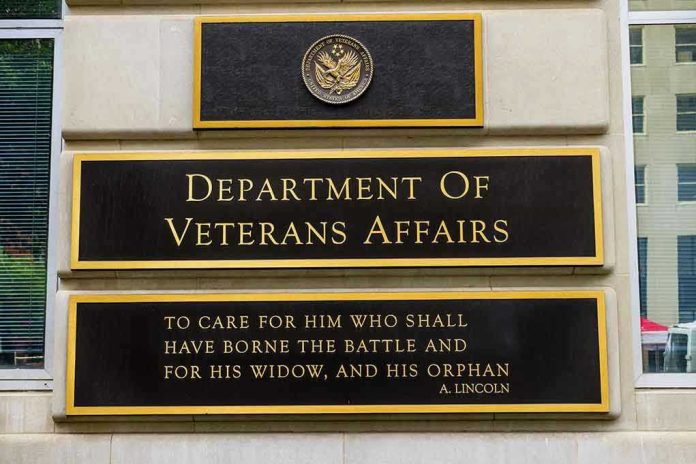
Trump’s new push to fast-track psychedelic drugs for mental illness puts hope for veterans and desperate patients on a collision course with real safety risks and deep mistrust of the federal system.
Story Snapshot
- Trump’s executive order tells health agencies to speed review and access to psychedelic therapies for serious mental illness, especially in veterans.
- The Food and Drug Administration (FDA) has already given ultra-fast review vouchers to three psychedelic drugs for depression and post-traumatic stress disorder.
- Supporters say faster access to drugs like psilocybin and ibogaine could cut suicides and transform mental health care.
- Critics warn that some of these drugs carry serious heart risks and still lack gold-standard trials, raising fears of rushed science.
Trump’s Order: Fast-Tracking Psychedelics in a Broken Mental Health System
President Donald Trump signed an executive order on April 18 that tells federal health agencies to “dramatically accelerate” research and access to psychedelic drugs for serious mental illness, including treatment-resistant depression, post-traumatic stress disorder, addiction, and veteran suicide. The order directs the Food and Drug Administration (FDA), Department of Health and Human Services, Drug Enforcement Administration, and Department of Veterans Affairs to coordinate and move faster on promising psychedelic treatments. Supporters see this as a rare moment when Washington might actually act on a crisis instead of just talking about it.
The FDA quickly followed the order with concrete steps that change the normal drug review timeline. It issued three Commissioner’s National Priority Vouchers to psychedelic programs, each tied to drugs that already earned Breakthrough Therapy status because early data looked better than current treatments. These vouchers are designed to shrink the review of new drug applications from about ten to twelve months down to roughly one to two months. For millions struggling with mental illness and slow, bureaucratic care, that speed is exactly what many have been begging for.
Which Drugs Are Being Pushed Forward — and Why Veterans Are Central
The FDA’s announcement named three specific types of psychedelic treatments that will get the ultra-fast review. Two are psilocybin-based therapies, one aimed at treatment-resistant depression and another at major depressive disorder; the third uses methylone, a drug related to MDMA, to treat post-traumatic stress disorder. Companies like Compass Pathways and Usona Institute have confirmed they received these vouchers for their psilocybin programs, and Transcend Therapeutics is advancing methylone for PTSD. These conditions are widespread among veterans, who often find that standard antidepressants and talk therapy do not fully relieve their symptoms.
Trump and his advisors have framed the order as a way to “reverse the crisis of serious mental illness in America,” with special focus on veterans who face higher suicide rates than the general population. Health and Human Services Secretary Robert F. Kennedy Jr. said the government will prioritize psychedelic therapies where early evidence shows “meaningful improvement over existing options” for severe mental illness. The order also calls for more data sharing among agencies and sets aside money for states that build treatment programs, signaling that this is not just a one-off gesture but a broader policy shift.
Ibogaine, Safety Concerns, and the Risk of Rushing the Science
One of the most controversial parts of Trump’s push is its embrace of ibogaine, a powerful psychedelic sometimes used abroad for addiction and post-traumatic stress disorder. Ibogaine is still listed as a Schedule I drug under federal law, meaning it is officially considered to have no accepted medical use. The executive order encourages access under the Right to Try Act and backs early research on noribogaine, an ibogaine-related compound for alcohol use disorder, but that does not change its basic legal status yet. This mix of bold promises and slow legal change adds to public confusion and fuels the belief that elites make the rules too murky for regular people to follow.
Safety concerns around ibogaine are not just political talking points; they come from peer-reviewed science. Studies show ibogaine can strongly affect the heart’s electrical system, causing a prolonged QT interval and dangerous rhythm problems that can be fatal, even under medical supervision. Clinical research on ibogaine in the United States remains limited, and there are still no large, randomized, placebo-controlled trials that clearly prove both safety and benefit. This means that while the order opens doors faster, it does not erase the need for strict safeguards — a point that matters to both skeptics of Big Pharma and critics of government overreach.
Rushed Hope, Real Limits, and the Trust Gap
Trump’s order fits into a longer pattern of the FDA using special tools like Breakthrough Therapy and Accelerated Approval to move promising drugs forward when standard treatments fail. Over the past few decades, more than 300 drugs have been pushed through faster pathways for serious conditions, cutting time to approval by many months. In that sense, psychedelics are not getting a free pass; they are entering an existing system that tries to balance urgency with scientific rigor. The FDA has stressed that fast review does not mean lower safety or effectiveness standards.
Why did they lead this Executive Order with Ibogaine instead of mushrooms?
Almost no one has heard of Ibogaine — and that's precisely the point. It sounds like a pharmaceutical already, not some obscure African shrub. It arrives without baggage.
Mushrooms, on the other hand,…
— Jon Rob (@homogalactic) June 29, 2026
Still, deep worries remain on all sides about who benefits and who stays shut out. The current medical model keeps most non-medical psychedelic use illegal, even if these drugs win approval in narrow, controlled settings. Many veterans also point out that new drugs alone will not fix broken care at the Department of Veterans Affairs, where understaffing, long waits, and limited benefits have been complaints for years. Some fear that flashy talk of “breakthrough” therapies lets leaders dodge the harder work of funding clinics, hiring counselors, and tackling the social and economic roots of the mental health crisis. For Americans who already think the federal government serves wealthy insiders first, this push for psychedelics looks like both a rare chance to save lives and another test of whether Washington can be trusted to do it right.
Sources:
reason.com, psychedelicalpha.com, reddit.com, statnews.com, insidehealthpolicy.com, genengnews.com, facebook.com, biospace.com, medscape.com, pmc.ncbi.nlm.nih.gov, foxrothschild.com, ozmosi.com