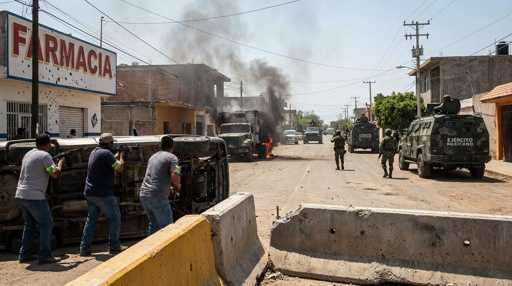
When a shattered Venezuelan city saw quake survivors and even security forces looting in the dark, many asked if this was survival, corruption, or both.
Story Snapshot
- Looting exploded in La Guaira just hours after twin earthquakes turned neighborhoods into rubble.[1][2]
- Survivors grabbed food, water, and medicine from wrecked shops as official aid arrived painfully slowly.[1][2][5]
- Others hauled out televisions, refrigerators, and electronics, feeding a media story of “opportunistic” crime.[1][2][5]
- Reports and footage show some security forces looting valuables instead of rescuing victims, deepening anger and mistrust.[3]
Quake Damage, Slow Aid, And A City On Edge
Powerful earthquakes struck La Guaira on June 24 and 25, turning coastal communities like Catia La Mar and Caraballeda into piles of broken concrete.[1][2] Thousands of homes were cracked or destroyed, and many families refused to go back inside, sleeping on highway medians, in parks, and in stadiums.[2] The government raised the death toll into the hundreds and then over 900 within a day, with thousands injured and missing.[2] Official help, food, and shelter arrived only in small amounts, described by one report as aid that “trickles in.”[2][5]
For older Americans on both the right and the left, this story feels painfully familiar. They have watched their own leaders argue while basic needs go unmet after disasters or crises. In La Guaira, Venezuelans saw the same pattern: slow and “meager” aid from authorities, even as tens of thousands were left without secure shelter or steady supplies.[5][6] When people feel abandoned, trust in government collapses fast, and raw survival takes over.
Looting Between Survival And Opportunity
As night fell after the quakes, people began entering damaged supermarkets and shops in Catia La Mar and other commercial areas.[1][2] Videos and photos show survivors carrying bags of food, bottled water, and clothing from ruined buildings, matching global research that most post-disaster looting focuses on basic needs.[1][4][13][14] At the same time, swarms of motorcycles were seen hauling away refrigerators, televisions, and electronics, suggesting clear “crime of opportunity” where chaos opened the door for theft beyond survival.[1][2][5]
News outlets captured this split in how the public sees the acts. Some journalists and witnesses called the looting “desperate” and linked it to slow aid and long lines for help.[4][5] Others condemned it as “opportunistic,” noting that many items taken were not food or medicine.[1][2] Disaster scholars say this clash is common: people under real strain grab what they need, but a smaller group abuses the chaos to steal high-value goods.[13][14][15] Media often focuses on the most shocking images, which can make all survivors look like criminals.
Security Forces Under Fire And A Crisis Of Trust
Officials in Venezuela said looting started when security forces and rescue teams were busy pulling survivors from collapsed homes, leaving shops and warehouses exposed.[1][2] The government answered by declaring a state of emergency and sending in the military to “stabilize” the area, giving legal cover to treat nearly all unauthorized taking of goods as a crime.[1][3] That may restore order, but it does little to fix the deeper problem: people without food, water, or shelter for days.
New reports now say the security crisis goes even deeper. One outlet describes security forces themselves caught on video stealing jewelry and other valuables from the rubble instead of rescuing trapped victims.[3] Social media clips of officers hauling boxed televisions on motorcycles have sparked outrage and calls to remove abusive forces from La Guaira.[3] For many Venezuelans, this confirms a long‑held fear that those in power will protect their own interests first, even in a disaster zone.
Why This Matters Beyond Venezuela
Older conservatives in the United States see this and think of bloated states that fail at basic tasks but still cling to power. They remember past “globalist” projects and big spending that did not fix their towns, and now they see another government unable—or unwilling—to get aid quickly to its own people. Slow logistics in La Guaira, combined with harsh crackdowns, look like yet another example of elites managing narratives while ordinary citizens fight to survive.[2][5][6][13]
Older liberals see a different but related failure: a state focused on control, not care. Military deployment, emergency laws, and the rush to label all looting “criminal” mirror what they criticize in “law‑and‑order” politics at home. Research on disasters shows most people act to help each other, not to prey on one another, and that real looting often comes from unmet basic needs.[13][14][15] When governments ignore that, the gap between rich and poor, safe and unsafe, only grows.
For both sides, the deeper lesson is the same. When a government cannot deliver fast, fair aid after a disaster, people lose faith, and some will break rules to live. History in this very region—like the 1999 Vargas tragedy, when flood survivors faced months without food, water, or services and widespread looting pushed the military into years of martial law—shows what happens when officials learn the wrong lesson.[8] They tighten control instead of fixing the broken systems that failed people in the first place.
Sources:
[1] YouTube – Venezuela quake survivors turn to looting
[2] YouTube – Furniture, Appliances& More Looted In La Guaira
[3] Web – Aid trickles in, survivors sleep outside, and looting breaks out in La …
[4] Web – Reports of looting emerged in Venezuela’s La Guaira region …
[5] Web – Looting Reported After Venezuela Earthquake … – Facebook
[6] Web – June 24-25, 2026 — Venezuela rocked by 7.5 and 7.2 magnitude …
[8] Web – ED’S FIELD REPORT Following the devastating back-to … – Instagram
[13] Web – La Guaira, Venezuela before and after the earthquake on June 24 …
[14] Web – Venezuela Live Updates: Window Narrowing to Find Survivors as …
[15] Web – On 25 June 2026, the Federal Council took note of the devastating …