House Republicans are pushing a nationwide voter ID and citizenship-proof mandate that could reset election rules before the midterms—and Democrats are already calling it “Jim Crow 2.0.”
Story Snapshot
- House GOP leaders scheduled a vote the week of Feb. 9, 2026, on an amended SAVE Act requiring proof of citizenship to register and government-issued photo ID to vote.
- The revised bill reportedly drops a prior requirement to prove citizenship at the polls, but would still tighten standards and restrict student IDs.
- Republicans argue the policy is common-sense election security with broad public support; Democrats argue it risks disenfranchising lawful voters.
- Advocacy groups warn millions may lack ready access to required documents, creating a practical hurdle even where voting is legal.
What the Amended SAVE Act Would Require
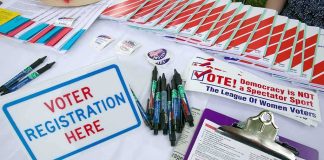
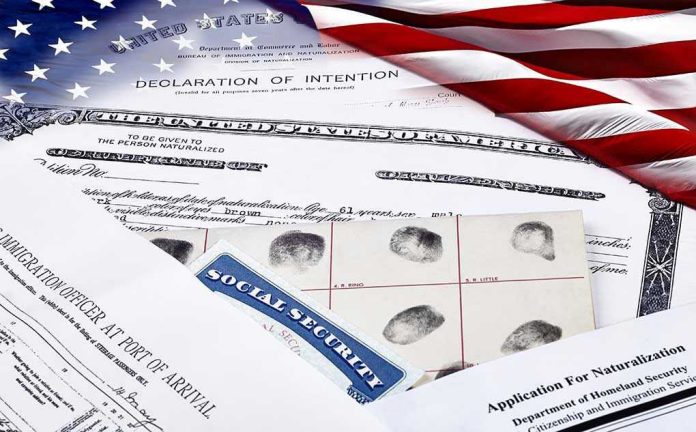
House Republicans teed up a vote for the week of February 9, 2026, on an amended version of the Safeguard American Voter Eligibility (SAVE) Act. The proposal would require proof of U.S. citizenship during voter registration—typically documents such as a passport or birth certificate—and would require government-issued photo identification for in-person voting nationwide. Reports on the amended language indicate it no longer demands citizenship documents at the polling place itself.
WAYNE ROOT: The Looting of Taxpayers by Democrats… the Most Dangerous Radical Communist in America… and the #1 Issue in America – Photo Voter ID (VIDEO) https://t.co/zATK8DKtGH
— The Gateway Pundit (@gatewaypundit) February 9, 2026
Republican sponsors and House leadership framed the change as a straightforward integrity standard rather than a new barrier for lawful voters. The argument is simple: Americans show ID to board airplanes or complete other regulated activities, so elections—one of the country’s most important civic functions—should not operate on looser verification. Supporters also say the bill is aimed at restoring public confidence, especially after years of high distrust in election administration.
Why the Fight Is Intensifying Now
Congress is revisiting voter ID and citizenship verification as the 2026 midterms approach and immigration remains a national flashpoint. Non-citizen voting in federal elections is already illegal under longstanding federal law, and multiple analysts describe it as rare, but Republicans argue “rare” is not the same as impossible—especially in a system where registration rules vary widely by state. The SAVE Act approach attempts to standardize baseline rules across the country.
State policy fragmentation is one reason the debate keeps returning. Research summaries show dozens of states require some form of identification, while fewer impose strict photo ID requirements, and rules for voters without ID differ dramatically. That patchwork means the same voter could face very different standards depending on where they live, and national campaigns must navigate 50 separate systems. Republicans say a national minimum clarifies expectations; critics say it federalizes a state-run process.
Democrats’ Objections and the Disenfranchisement Claims
Democratic leaders have characterized the SAVE Act as a voter-suppression effort, with Senate Majority Leader Chuck Schumer reportedly labeling it “Jim Crow 2.0.” The core critique is not that citizenship should be ignored, but that documentation requirements can collide with real life—name changes after marriage, missing birth certificates, limited access to passport services, or bureaucratic delays. Opponents also object to provisions that would reject certain IDs, including student IDs.
Progressive legal and voting-rights groups have offered specific estimates of how many Americans may lack the relevant paperwork. The Brennan Center has cited figures such as tens of millions who may not have ready access to citizenship documents, along with large numbers of women whose legal names may not match older documents. Another cited group has argued that many Americans, especially younger adults, do not have driver’s licenses—raising the prospect that a photo-ID mandate could require new steps to vote.
Public Support vs. Practical Burdens
Polling cited in coverage indicates voter ID enjoys broad approval across party lines, including majorities among Democrats, even as Democratic lawmakers oppose the SAVE Act’s structure. That political split—popular concept, fierce legislative battle—helps explain why the messaging is so heated. Republicans emphasize the simple question most voters ask: “Why wouldn’t you want ID for voting?” Democrats emphasize the operational question: “What happens to eligible voters who can’t comply in time?”
Republican lawmakers have pointed to mitigation strategies, including proposals for free or government-subsidized identification, to reduce the cost barrier. That addresses one common objection but not all of them, because citizenship-proof requirements can still involve time, paperwork, and access to government offices. Critics also argue that if non-citizen voting is truly rare, imposing new nationwide hurdles may be a blunt instrument. Supporters respond that elections should be secured proactively, not after controversies erupt.
What Happens Next in Congress
The House vote is expected to be competitive but favorable to Republicans given the GOP majority and prior House passage of a version of the SAVE Act in 2024, which drew a small number of Democratic votes. The more difficult terrain is the Senate, where Democratic resistance and procedural realities can stall legislation. With President Trump supporting tighter election integrity measures, backers see momentum; opponents see a nationalized fight over access that could reshape turnout dynamics.
Wayne Root and other conservative commentators have promoted photo voter ID as a top-tier national issue, often pairing the debate with broader arguments about illegal immigration and government spending. The strongest, most verifiable point in the current record is narrower: a real bill is moving, it has concrete requirements, and it would change how millions register and vote. With both sides conceding the stakes are high, Americans should watch for final bill text, exemptions, and implementation timelines—not slogans.
Sources:
House GOP sets up vote for nationwide voter ID bill requiring proof of citizenship to vote
Republican lawmaker says voter ID mandates should include free government-subsidized IDs
House Republicans’ SAVE Act voter suppression legislation midterms
Five things to know about the SAVE Act