
A state-funded foreign broadcaster stands accused of literally rewriting an American president’s words about January 6—and now faces a multibillion‑dollar reckoning.
Story Snapshot
- President Trump has filed a multibillion‑dollar defamation lawsuit against the BBC over allegedly deceptive editing of his January 6 Ellipse speech in a 2024 documentary.
- The complaint says BBC editors removed his “peacefully and patriotically” line and spliced remarks to make it sound like he explicitly called for violence.
- The controversy already forced two senior BBC officials to resign and triggered a formal BBC apology, but no compensation.
- The case could reshape how powerful media outlets handle political footage and how far they can go before crossing constitutional and legal lines.
Trump Challenges BBC Over “Words Put in My Mouth”
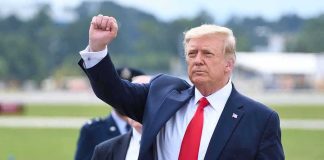
President Trump is suing the British Broadcasting Corporation for at least $5–10 billion, arguing that a pre‑election BBC documentary twisted his January 6, 2021 Ellipse speech into something it was not. The lawsuit claims producers cut his call for supporters to act “peacefully and patriotically” and instead stitched together audio to imply he literally urged violent insurrection. For many conservatives, that allegation hits a nerve after years of watching corporate media recast lawful political dissent as extremism.
The documentary aired shortly before the 2024 election, at the very moment establishment media were again trying to cement a narrative that Trump personally ordered chaos at the Capitol. According to reporting, the contested segment did not simply select harsh moments; it allegedly altered the meaning of his remarks by omission and splicing. If proven, that goes far beyond bias or spin and into the territory of manufacturing a damning quote that never actually occurred in real life.
How a BBC Documentary Sparked Resignations and an Apology
After the film aired, concerns reportedly erupted inside the BBC about whether the Jan. 6 segment met the organization’s own standards of accuracy and impartiality. An internal memo questioning the editing choices leaked to the press, triggering public scrutiny in the United Kingdom and the United States. The fallout was severe enough that two senior BBC officials resigned, and the broadcaster issued a formal apology for the way the footage had been handled, even as it stopped short of admitting legal defamation.
For viewers who already doubted media fairness, those resignations and the apology confirm that something was badly wrong behind the scenes. The BBC operates under a Royal Charter and strict editorial guidelines that supposedly forbid misleading edits of political content. Yet critics say the Jan. 6 documentary showed what happens when those rules collide with an institutional culture that, like many Western outlets, often treats conservative populists as acceptable targets. Trump’s legal team is now using the BBC’s own internal turmoil as evidence that producers knew or should have known the edit crossed ethical lines.
The Legal Stakes: Actual Malice and Foreign Media Power
Under American law, the president will have to show that the BBC acted with “actual malice” by publishing material it knew was false or by recklessly disregarding the truth. That is a deliberately high bar, crafted to protect open debate under the First Amendment while still punishing outright fabrication. The leaked memo and subsequent resignations could become crucial, because they may reveal who inside the BBC raised red flags and whether those concerns were brushed aside in pursuit of a more dramatic narrative.
There is also the unusual fact that a sitting U.S. president is suing a foreign, state‑funded broadcaster in what is likely an American court. That raises jurisdiction and immunity questions, but it also underlines a broader concern for many patriots: foreign institutions shaping U.S. elections and public opinion with taxpayer money from abroad. If the court allows the case to proceed, discovery could force the BBC to open its files on how the documentary was conceived, how the Jan. 6 segment was edited, and whether anyone involved understood they were changing the meaning of Trump’s words.
Pattern of Media Litigation and What It Means for Everyday Americans
This lawsuit is part of a broader pattern of Trump using the courts to push back on outlets he says have crossed the line from commentary into character assassination. Recent years have seen claims lodged against major American newspapers and networks, some of which reportedly settled for significant sums while others were dismissed and refiled in streamlined form. Supporters view this strategy as a necessary counterweight to media conglomerates that enjoy massive platforms yet rarely face real accountability for smears that can destroy reputations and influence elections.
For ordinary citizens, the BBC case is about more than one edited speech. If a globally respected broadcaster can allegedly edit an American president into an inciter of violence, it raises a chilling question: what can they do to a parent at a school‑board meeting, a gun owner speaking at a rally, or a small‑town pastor defending biblical marriage? The outcome will signal whether powerful media organizations are finally checked when they cross into narrative‑building that erodes both truth and the constitutional culture conservatives are fighting to protect.
Sources:
Trump hits BBC with lawsuit over Jan. 6 speech editing – Axios