
The Trump administration’s recent military strikes on Venezuelan drug boats raise significant concerns about executive overreach and potential escalation towards conflict.
Story Highlights
- Senator Rand Paul criticizes Trump’s military operations as a “prelude to war.”
- The strikes have resulted in at least 26 confirmed deaths since September 2025.
- The White House defends the legality, citing the opioid crisis and narco-terrorism.
- Bipartisan congressional investigation initiated to examine the legality and strategy.
Senator Rand Paul’s Criticism
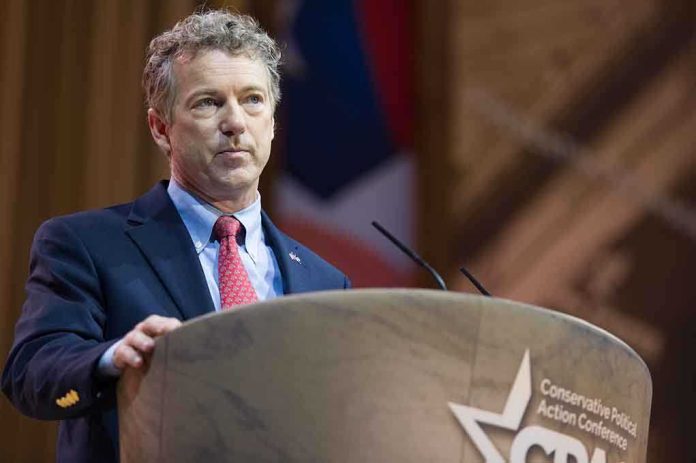
On December 2, 2025, Senator Rand Paul publicly criticized the Trump administration’s military strikes against alleged drug-trafficking vessels from Venezuela. Paul, who chairs the Senate Homeland Security Committee, characterized these operations as a “prelude to war.”
He raised concerns about the legality of these actions and the role of Defense Secretary Pete Hegseth in ordering such strikes. Paul’s criticism highlights intra-party divisions over Trump’s aggressive Venezuela policy.
The strikes began in September 2025, with the first airstrike killing eleven people on a Venezuelan speedboat. Subsequent strikes have resulted in additional casualties. These operations are part of Trump’s hardline stance on Venezuela, a nation viewed as a source of drug trafficking to the US. The strikes have escalated US military engagement in the Caribbean, raising questions about the potential for broader conflict.
White House Defense
The White House has defended the military operations, emphasizing their legality under the laws of war. Spokeswoman Karoline Leavitt stressed that the strikes target “presidentially designated narco-terrorist groups,” a classification that includes the Venezuelan criminal organization Tren de Aragua.
The administration sees these actions as necessary responses to the severe opioid crisis in the United States, which has been linked to drug trafficking from Venezuela.
However, these justifications are met with skepticism both domestically and internationally. Critics, including human rights groups and international bodies, argue that the strikes may violate US and international law. The concerns about civilian casualties and lack of due process in these operations have further fueled the debate.
Congressional and International Reactions
The criticism from Senator Paul has prompted a bipartisan investigation led by the Armed Services Committee. This reflects broader congressional concerns about the legality and strategic implications of the strikes. Despite the Senate twice failing to pass resolutions limiting Trump’s authority, there is significant pressure for transparency and accountability regarding these military operations.
The strikes have also strained US relations with Colombia, a key regional ally. Colombian President Gustavo Petro suspended intelligence sharing with the US, citing concerns about the unilateral nature of the strikes and potential Colombian casualties. This diplomatic fallout underscores the complex geopolitical implications of the Trump administration’s actions.
Sources:
Wikipedia article on 2025 US military strikes