
America’s culture war just collided with a real-world warning: when gas prices spike after a foreign-policy crisis, even late-night TV senses the political ground shifting under Trump’s second term.
Story Snapshot
- Stephen Colbert used a “Late Show” monologue to mock President Trump’s polling slump and the voters who still strongly approve of him.
- A University of Massachusetts Amherst poll cited in coverage put Trump’s approval at 33%, with 22.4% “strong approval” and 47.2% “strong disapproval.”
- The comedy bit tied domestic pain—especially high gas prices—to escalating U.S.-Iran tensions, a pressure point now dividing parts of the MAGA coalition.
- The segment became a quick viral snapshot of polarization: a studio crowd booed loyalists while cheering bad numbers for the president.
Colbert’s monologue turned a polling dip into a cultural confrontation
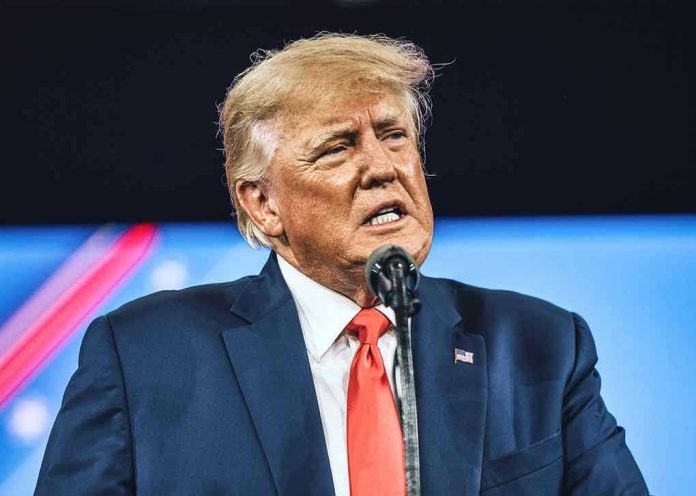
Stephen Colbert’s Tuesday-night monologue on CBS took aim at President Donald Trump by spotlighting new approval numbers and then turning directly to the camera to needle the remaining diehard supporters. According to reporting on the segment, Colbert highlighted a University of Massachusetts Amherst poll placing Trump at 33% approval—described as his lowest in the second term—before asking loyalists, “Who are you?” and playing the moment for laughs.
The punchline wasn’t just that support exists—it was that Colbert framed it as irrational devotion in the face of self-inflicted pain. The monologue included a satirical impersonation suggesting these supporters “want” high gas prices and even absurd niche grievances, using exaggeration to portray the base as cheering for outcomes that hit ordinary families. The joke landed with the studio audience, where boos at Trump supporters were part of the on-air exchange described by outlets covering the clip.
The poll numbers cited: approval at 33%, strong approval at 22.4%
The core factual hook for the segment was polling. Coverage cited a UMass Amherst poll that put Trump’s overall approval at 33% and strong approval at 22.4%, alongside 47.2% strong disapproval. Media coverage also described the approval as down five points since July 2025 and eleven points compared with April 2024, though the exact poll field dates were not specified in the provided reporting beyond being after Iran-related tensions escalated.
Those numbers matter because they provide a measurable sign that the coalition holding through the early part of the second term may be under strain. Polling snapshots don’t prove causation, and the research here doesn’t include cross-tabs or methodology details beyond the toplines reported. Still, the segment’s reliance on a single, widely repeated data point shows how fast political narratives form: when approval drops, the media ecosystem turns it into a character story about who is still loyal.
Iran tensions, energy costs, and the MAGA split on “another war”
The monologue’s most politically relevant thread was the link between foreign-policy tension with Iran and pain at the pump. Multiple write-ups of Colbert’s jokes referenced U.S.-Iran tensions as a driver of gas spikes, using that economic stress to frame the president’s slump. For conservative voters, this intersects with a real frustration: after years of complaining about globalism, overspending, and inflation, many are now even more fed up with the prospect of another open-ended conflict that raises energy prices at home.
That frustration also helps explain why the conversation inside the right is more complicated in 2026 than the caricature shown on late-night TV. Parts of the MAGA base have grown skeptical of foreign entanglements and increasingly question blank-check commitments abroad when the domestic costs land immediately on working families. The research provided doesn’t document a specific administration policy change in this episode, but it does show the political vulnerability: when a conflict narrative becomes “Iran equals higher gas,” support can fracture fast.
What the media moment reveals about polarization—and what it doesn’t
Fox News and Mediaite both treated the clip as an example of late-night political satire doing what it has done for years—using polling and controversy to entertain an ideologically friendly audience. The segment also shows how public institutions and national culture collide: a studio crowd’s boos and cheers become a stand-in for a national argument. That dynamic can harden resentment, especially among conservatives who already feel mocked by coastal media gatekeepers and corporate entertainment.
At the same time, the available sources are thin on what matters most for voters: concrete policy details, verified timelines, and what the administration is doing next. The research includes no Trump response, no additional data after the monologue, and no broader polling trendlines beyond the one poll’s comparisons. What remains is a snapshot: a comedian amplifying polling weakness while a segment of the conservative electorate debates whether the country is being pulled toward another costly overseas showdown.
Even if you ignore Colbert’s politics, the underlying pressure points are real for constitutional conservatives: energy affordability, the temptation toward permanent conflict, and the public’s growing distrust of institutions that lecture citizens while living insulated from the consequences. Those concerns won’t be resolved by a punchline, and they won’t be resolved by pretending internal divisions don’t exist. They will be resolved—or worsened—by what Washington chooses to do next.
Sources:
Stephen Colbert mocks Trump fans who still support the president: ‘Who are you?’